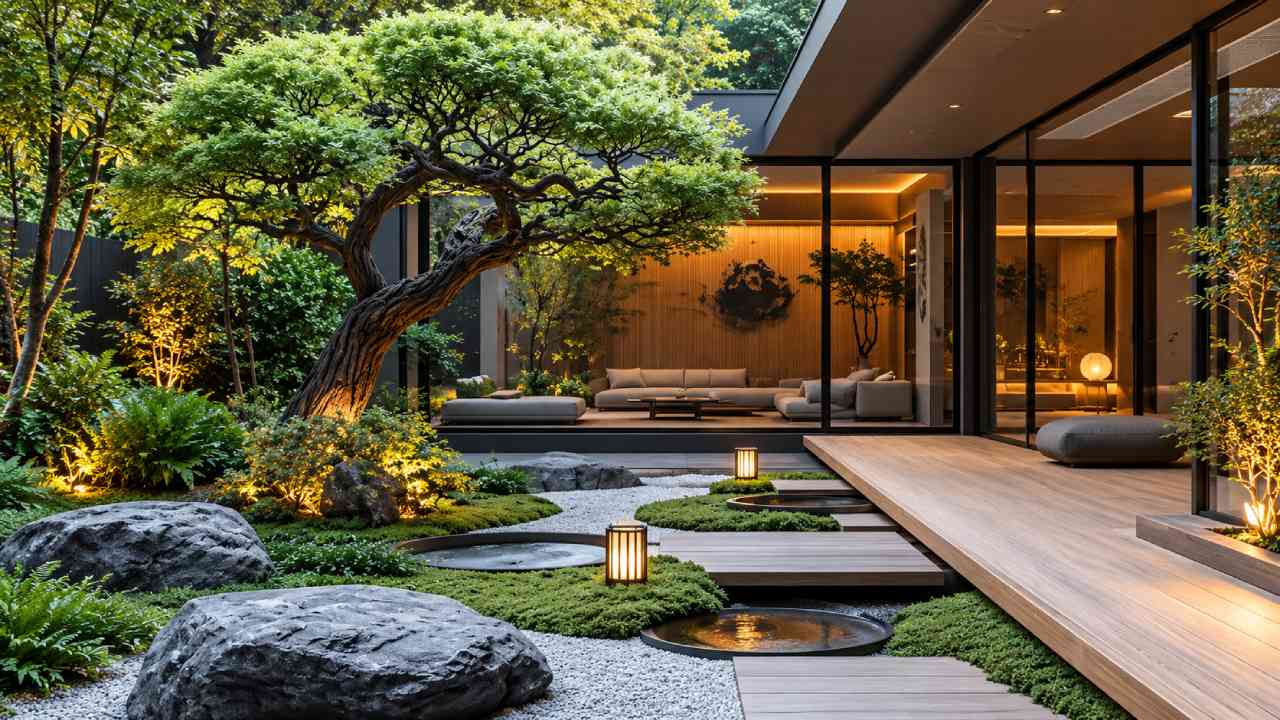
Mayumiotero – A Zen Garden brings Japanese simplicity into modern outdoor spaces through carefully chosen natural elements. Instead of filling every corner with plants and decoration, this garden style values balance, texture, and open space. Rocks often become the main visual anchors, while gravel creates a calm and orderly background. Meanwhile, moss and restrained greenery can soften the composition. This approach has roots in the Japanese dry landscape garden, commonly known as karesansui. However, modern homeowners often reinterpret its visual principles for courtyards, patios, and compact gardens. In my view, its strongest appeal comes from restraint. Every element needs a reason to exist. Therefore, even a relatively small area can develop a strong visual identity without appearing crowded. The result feels peaceful, thoughtful, and timeless. More importantly, the design proves that an outdoor space does not need excessive decoration to leave a lasting impression.
Read Also: NVIDIA Acquires Hugging Face, Raising Big Questions for Open-Source AI
Japanese Dry Gardens Inspire a More Thoughtful Design Approach
Traditional Japanese dry gardens provide much of the inspiration behind what people commonly call Zen gardens today. Historically, designers used stones, gravel, sand, moss, and carefully controlled vegetation to suggest larger natural landscapes. Rather than copying nature literally, they created an abstract interpretation of it. For example, arranged stones can evoke mountains or islands. Likewise, patterns drawn across gravel may suggest flowing water or waves. This visual language gives a relatively limited space a much greater sense of scale. Moreover, it encourages people to notice subtle details instead of searching for dramatic decoration. Modern landscape design can learn from this approach without directly copying a historic temple garden. Designers can study proportion, negative space, texture, and restraint. As a result, a contemporary Zen Garden can respect Japanese inspiration while still responding to the architecture, climate, and practical needs of a modern home.
Rocks Create Structure Without Making the Garden Feel Busy
Rocks often provide the visual foundation of a Zen Garden. Their size, texture, shape, and position can influence the character of the entire space. However, successful placement requires more than arranging several attractive stones together. Each rock should relate naturally to the surrounding composition. A large stone can serve as a focal point, while smaller stones create visual rhythm around it. In addition, partially embedding stones in the ground can make them appear more settled within the landscape. This detail often feels more natural than simply placing rocks on top of gravel. Designers also benefit from avoiding perfect symmetry. Slight irregularity can create movement while preserving visual balance. Therefore, a small number of carefully positioned rocks often works better than a crowded collection. When viewed from different angles, the composition should continue to feel intentional. That restraint allows individual materials to become more noticeable and gives the garden its quiet character.
Raked Gravel Adds Movement to an Otherwise Still Landscape
Gravel brings another important layer to Zen-inspired outdoor design. Its pale, neutral surface creates contrast with darker stones and green plants. More importantly, raked patterns introduce visual movement without requiring fountains or ponds. Straight lines can create a structured appearance, while curved patterns can suggest ripples or flowing water. Yet the design does not need an elaborate pattern to look effective. In fact, simpler lines often complement modern architecture more naturally. Regular maintenance also becomes part of the experience because the patterns need occasional refreshing. For some homeowners, this process can become a calming garden ritual rather than a chore. Furthermore, gravel offers practical benefits in spaces where maintaining a lawn would feel unnecessary. Proper edging and a suitable base can help keep the area tidy. Consequently, gravel works as both a visual and functional element, especially in compact courtyards and minimalist landscapes.
Negative Space Gives Every Element More Visual Importance
One of the most useful lessons from Zen Garden design involves understanding empty space. In many modern gardens, homeowners instinctively try to fill unused areas with furniture, plants, sculptures, or lighting. However, empty areas can make the existing elements feel more significant. A single stone surrounded by open gravel attracts more attention than the same stone placed among numerous decorations. Similarly, a small patch of moss can become a striking detail when the surrounding composition remains restrained. This principle makes negative space an active design tool rather than an unfinished area. Moreover, it can make small gardens appear calmer and more spacious. The eye receives clear places to rest, which reduces visual clutter. Therefore, planning what to leave empty deserves as much attention as choosing what to add. In contemporary homes, this approach can also create a smoother visual relationship between minimalist architecture and the surrounding landscape.
Plants Should Support the Composition Rather Than Dominate It
Plants can enrich a Zen Garden, although restraint remains important. Moss creates a soft contrast against rough stone, while compact shrubs can provide subtle structure. Depending on the local climate, ornamental grasses, ferns, Japanese maples, or other suitable plants may also complement the design. However, copying plants from a Japanese garden without considering local conditions can create unnecessary maintenance problems. A better approach starts with the visual role of the plant. Then, homeowners can select a locally appropriate species with similar form, texture, or seasonal character. This strategy supports healthier landscaping while maintaining the desired aesthetic. Furthermore, limiting the plant palette creates stronger visual continuity. Several repeated varieties often look more cohesive than dozens of unrelated species. Seasonal changes can still add interest through new leaves, subtle flowers, or changing foliage. Consequently, greenery becomes a supporting layer that enhances the stones and open spaces instead of competing with them.
Modern Homes Give Zen Garden Ideas a Fresh Architectural Context
Contemporary architecture works especially well with Zen-inspired landscaping because both approaches often value clean forms and carefully controlled details. A narrow courtyard beside large glass windows, for example, can become a framed landscape rather than unused space. Similarly, a gravel garden beside concrete walls can soften the architecture without hiding its modern character. Wood, stone, and subdued lighting can strengthen this connection further. Nevertheless, the garden should respond to the building instead of functioning as a separate decoration. Sightlines from windows deserve particular attention because many homeowners experience the garden from indoors as often as they do outside. Therefore, placing a focal stone or sculptural tree within an important view can make the landscape part of the interior experience. This relationship becomes especially valuable in compact urban homes. Even when outdoor space remains limited, thoughtful composition can create a strong sense of depth and connection with nature.
Small Courtyards Can Capture the Spirit Without Copying a Temple
A large property is not necessary for creating a meaningful Zen Garden. In fact, compact spaces can benefit greatly from its restrained design language. A narrow courtyard may need only gravel, three carefully selected stones, a small area of greenery, and subtle lighting. Meanwhile, a balcony can borrow the aesthetic through natural materials and a simpler composition. The key is avoiding miniature versions of every traditional element. Adding lanterns, bamboo screens, bridges, stones, statues, and many plants at once can quickly make a small area feel themed rather than thoughtful. Instead, choose a limited palette and repeat materials already present in the home. For example, warm timber can connect an outdoor seating area with an interior floor. Dark stones can echo architectural details. As a result, the garden feels integrated rather than attached. This approach captures the spirit of simplicity while allowing the design to remain personal and contemporary.
Read Also: Art Deco Design Blends Vintage Glamour With Modern Elegance
Natural Materials Help the Space Age with More Character
Natural materials play an important role because their appearance changes gradually over time. Stone develops subtle weathering, timber gains a softer patina, and moss can slowly settle into suitable shaded areas. Rather than seeing every change as a flaw, Zen-inspired design can embrace some of this natural aging. However, durability still matters. Outdoor timber needs appropriate treatment, while stones and gravel should suit local weather conditions. Drainage also deserves careful planning because standing water can damage surfaces and encourage unwanted growth. Therefore, aesthetic decisions should work alongside practical landscape construction. In my experience, the most convincing outdoor spaces rarely depend on appearance alone. They feel successful because materials, drainage, maintenance, and planting work together. Furthermore, durable choices can reduce the need for frequent replacement. That allows the garden to mature naturally while preserving the calm visual language established at the beginning.
Soft Lighting Can Extend the Garden Experience Into the Evening
Lighting can transform a Zen Garden after sunset, but excessive brightness can easily destroy its calm atmosphere. Instead of illuminating every surface, use light selectively. A low fixture can reveal the texture of a large stone, while another can create gentle shadows around a tree or shrub. Warm, restrained illumination usually works better than intense decorative lighting. Moreover, hiding the light source can keep attention on the landscape itself. Shadows become part of the composition and add another layer of depth. Safety remains important, particularly around steps and pathways, so practical lighting should still guide movement. However, practical fixtures can blend quietly into the overall design. When lighting supports rather than dominates the garden, the outdoor area remains visually connected to the home after dark. Consequently, even a small courtyard can become an attractive evening view from a living room, bedroom, or dining area.
Zen Garden Design Shows Why Simplicity Can Feel Timeless
The lasting appeal of the Zen Garden comes from its ability to create atmosphere with relatively few elements. Rocks provide structure, gravel introduces texture, plants soften the composition, and negative space gives everything room to breathe. Yet the strongest designs do not simply collect these features. Instead, they establish a clear relationship between each element and the surrounding architecture. This distinction matters when adapting Japanese garden inspiration to modern homes. Thoughtful interpretation usually feels more authentic than copying decorative symbols without understanding their purpose. Furthermore, simplicity can make maintenance and future changes easier to manage. A restrained garden can evolve gradually as plants mature and materials weather. Ultimately, the Zen Garden offers more than a recognizable visual style. It demonstrates how careful placement, natural materials, and intentional empty space can turn an ordinary outdoor area into a calm and elegant landscape.