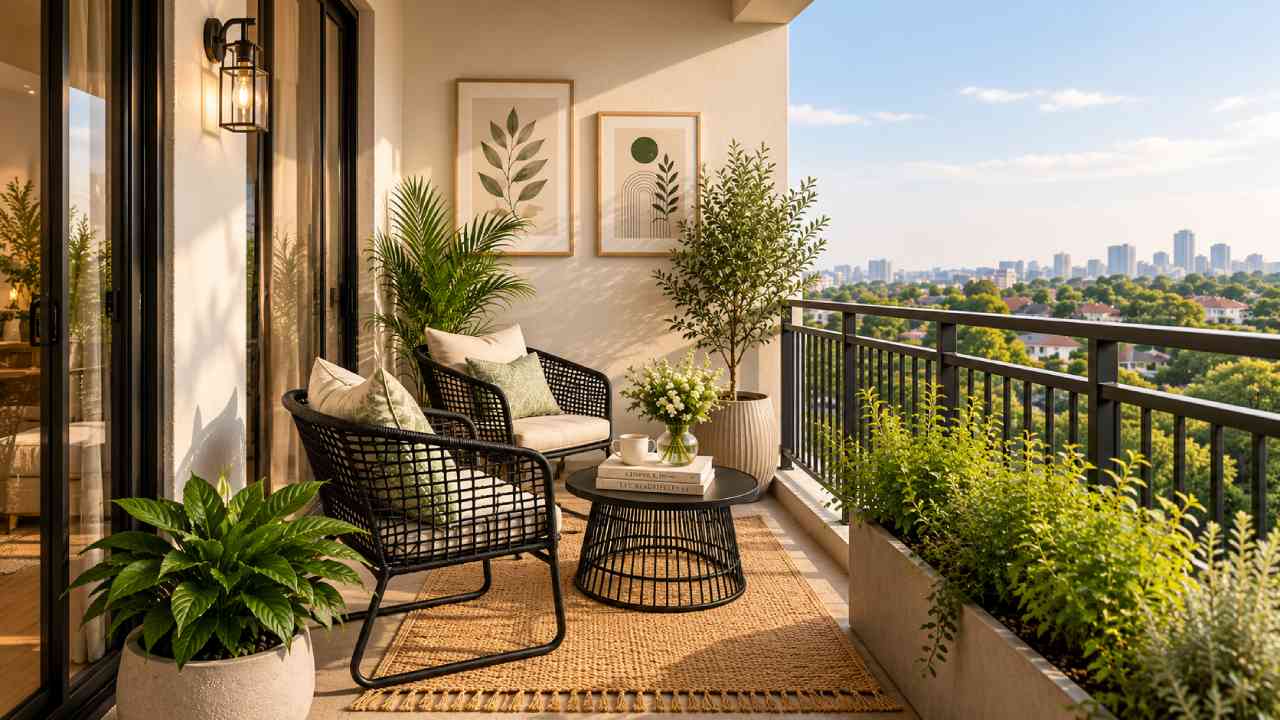
Mayumiotero – A Small Balcony Makeover can turn an overlooked outdoor corner into a cozy retreat. More importantly, the transformation does not require a large space or expensive renovation. Start by deciding how you want to use the balcony. Perhaps you need a quiet reading corner, a morning coffee spot, or a tiny garden. Once the purpose is clear, every design choice becomes easier. For example, a reading space may need one comfortable chair and a small side table. Meanwhile, a coffee corner could benefit from two folding chairs and a compact table. Avoid filling the area with decorative items before choosing its main function. Instead, measure the available space and keep a comfortable walking path. This simple approach creates a balcony that looks attractive while remaining practical for everyday life.
Choose Compact Furniture That Leaves Room to Move
Furniture can quickly dominate a small balcony. Therefore, scale matters more than the number of pieces you buy. Slim chairs, folding tables, and compact benches usually work better than bulky outdoor furniture. A foldable bistro set is especially useful because it can be stored when extra floor space is needed. Alternatively, consider a narrow bench with hidden storage. It provides seating while keeping cushions or small gardening tools organized. Before buying anything, measure the balcony carefully. Remember to check door clearance as well. A beautiful chair becomes frustrating when it blocks the entrance. In my view, one well-sized seating area often looks more inviting than several small pieces squeezed together. The goal is not to fill every corner. Instead, furniture should create enough comfort while allowing the balcony to feel open and easy to use.
Bring the Space Alive With Carefully Chosen Plants
Plants can completely change the mood of a compact outdoor area. They soften hard surfaces and add natural color without requiring major construction. However, a successful Small Balcony Makeover does not mean covering every available surface with pots. Start with a few plants that match the balcony’s conditions. Consider sunlight, wind, rainfall, and your available time for maintenance. If floor space is limited, think vertically. Hanging planters, railing boxes, and tiered plant stands can add greenery without crowding the walking area. Herbs can also be practical choices for a sunny balcony. Basil, mint, rosemary, or other suitable herbs can create a small edible garden. Still, plant selection should match your local climate. By choosing plants carefully, the balcony can feel lush while remaining organized, comfortable, and manageable.
Read Also: China Develops Laser Internet to Connect Future Humans on the Moon
Use Vertical Space Instead of Crowding the Floor
When square footage is limited, walls and railings become valuable design opportunities. Vertical decorating can make a balcony more functional without reducing usable floor space. For instance, a narrow plant rack can hold several small pots. Wall-mounted shelves may provide space for lightweight decorations when installation is permitted. Likewise, hanging planters can introduce greenery at different heights. This layered approach draws the eye upward and can make the balcony feel larger. However, safety should always come before decoration. Items attached to walls or railings must be secure and suitable for outdoor conditions. This becomes especially important on exposed balconies where strong winds are possible. Avoid placing heavy objects where they could fall. With thoughtful planning, vertical space can provide storage, greenery, and personality while keeping the main area pleasantly uncluttered.
Add an Outdoor Rug for an Instant Visual Change
An outdoor rug can make a surprisingly large difference. It defines the seating area while introducing texture, pattern, and warmth. As a result, a plain balcony can begin to feel like a genuine extension of the home. Choose a rug designed for outdoor conditions rather than using a regular indoor carpet. Outdoor materials are generally better suited to moisture and changing weather. In addition, select a size that fits comfortably around the main furniture. A rug that is too large can make a tiny balcony feel crowded. On the other hand, an extremely small rug may look disconnected from the seating area. Interlocking outdoor deck tiles can provide another option for suitable balconies. However, drainage must remain clear. Water should never become trapped beneath decorative flooring. Practical details like these help keep the makeover attractive and easier to maintain.
Create a Warm Atmosphere With Simple Lighting
Lighting becomes especially important when the balcony is used after sunset. Soft illumination can transform a practical daytime area into a relaxing evening retreat. String lights are popular because they require little visual space. Small lanterns and rechargeable outdoor lamps can also create a warm atmosphere. However, avoid using too many different lighting styles at once. Small spaces usually look better with a simple and consistent approach. Warm light often creates a calmer mood than harsh, bright illumination. At the same time, any electrical lighting should be suitable for outdoor use and installed according to its safety instructions. Battery or rechargeable options may be practical where electrical outlets are unavailable. With the right lighting, even a modest balcony can become an inviting place for evening conversations, quiet reading, or simply enjoying fresh air after a long day.
Keep the Color Palette Calm and Connected
Too many competing colors can make a small balcony feel visually crowded. Therefore, choose a simple palette before adding cushions, planters, rugs, and accessories. Neutral shades can provide a calm foundation. Then, introduce one or two accent colors through smaller decorative pieces. Natural materials also work beautifully in compact outdoor spaces. Wood tones, woven textures, terracotta pots, and green plants can create a relaxed atmosphere without excessive decoration. Alternatively, a modern balcony may combine black details with warm neutrals and simple greenery. The exact style matters less than consistency. Scandinavian, Japandi, bohemian, Mediterranean, and minimalist influences can all work well. However, mixing every style together may weaken the overall design. A connected palette helps separate objects feel like parts of one intentional space.
Add Comfort Without Filling Every Empty Corner
A cozy balcony needs softness, but it does not need endless accessories. One or two outdoor cushions can make a simple chair more inviting. Likewise, a lightweight throw can add texture when the weather is suitable. Decorative objects should have a clear role whenever possible. For example, a lantern provides both atmosphere and visual interest. A planter adds color while supporting greenery. Meanwhile, a storage bench offers comfort and organization at the same time. This approach reduces clutter and gives every object a purpose. It also makes cleaning easier. Remember that outdoor items face dust, wind, moisture, and sunlight. Therefore, washable fabrics and weather-appropriate materials are usually practical choices. The most successful cozy spaces often feel edited rather than overloaded. Leaving some empty space allows individual details to stand out.
Turn the Balcony Into a Personal Coffee Corner
A balcony can become much more enjoyable when its design supports a daily ritual. For many people, that ritual is morning coffee. Fortunately, creating a tiny outdoor coffee corner requires very little furniture. A compact chair and narrow table may be enough. Add a comfortable cushion, one favorite plant, and a clear place for your cup. Then, keep the surrounding decoration simple. This setup can encourage you to use the balcony regularly rather than treating it as an unused storage area. Of course, the same idea can support other habits. Tea lovers can create an afternoon tea corner. Readers may prefer a comfortable seat with good lighting. Ultimately, a Small Balcony Makeover becomes more meaningful when it reflects how you actually spend your time.
Consider Privacy Without Blocking the Entire View
Privacy can make an urban balcony feel more comfortable. Still, completely enclosing a small area may reduce airflow and make it feel even smaller. A balanced solution is usually better. Depending on building rules, privacy screens, outdoor curtains, or strategically positioned plants may provide partial separation. Tall plants can soften nearby views while preserving a natural atmosphere. However, wind exposure must be considered before adding screens or large planters. Anything placed on a balcony should remain secure during changing weather. It is also important to check building or rental restrictions before attaching permanent features. Instead of trying to create complete isolation, focus on making the seating area feel slightly more sheltered. Even modest privacy can turn an exposed balcony into a more relaxing personal retreat.
Smart Storage Keeps a Small Balcony Organized
Clutter becomes noticeable very quickly in a compact space. For that reason, storage should be included in the makeover from the beginning. Multi-purpose furniture is especially helpful. A bench with internal storage can hold small outdoor items while providing seating. A narrow shelving unit may organize gardening supplies and lightweight accessories. However, avoid turning the balcony into a storage room. Keep only items that support the space’s main purpose. Seasonal or rarely used belongings are usually better stored elsewhere. Regular editing also helps. If an item has not been useful for months, consider whether it deserves valuable balcony space. This simple habit protects the open feeling that makes a small retreat enjoyable. Good storage should almost disappear into the design rather than becoming the dominant feature.
Small Details Can Create the Biggest Transformation
The final stage of a Small Balcony Makeover is about personality rather than quantity. A favorite cushion, handmade planter, small piece of outdoor art, or carefully chosen lantern can make the space feel personal. Yet restraint remains important. Add a few details, then observe the balcony before adding more. Often, the transformation already feels complete once furniture, plants, lighting, and texture work together. More decoration does not automatically create more character. In fact, empty space can make carefully selected pieces feel more meaningful. The best balcony is not necessarily the one that follows every design trend. Instead, it should feel comfortable enough to use regularly. When function and personality meet, even a tiny balcony can become a peaceful retreat just outside the door.