Mayumiotero – The modern home office has changed from a temporary desk into an important part of everyday living. As a result, many people now want a workspace that feels comfortable, organized, and visually calm. A Minimalist Workspace offers exactly that balance. Instead of filling a desk with decorations and unnecessary gadgets, this approach focuses on useful objects and intentional design. A laptop, monitor, ergonomic chair, warm desk lamp, and smart storage may be enough to create an inviting setup. However, minimalism does not mean removing personality. Wood textures, plants, artwork, and carefully chosen accessories can still make the space feel personal. The goal is simply to reduce visual clutter while keeping everything needed within reach. Therefore, a minimalist home office can support both practical work and creative thinking. It also proves that an inspiring workspace does not always require a large room or an expensive renovation.
Minimalist Workspace Design Begins With Purpose
A successful Minimalist Workspace starts by understanding how the space will actually be used. A writer may need little more than a laptop, notebook, and comfortable chair. Meanwhile, a designer could require a larger monitor, drawing tablet, and additional storage. Because these needs differ, copying another person’s desk setup rarely creates the perfect result. Instead, the workspace should follow the user’s daily routine. Start with the essential tools and build around them. This simple approach prevents unnecessary items from taking over the desk. It also makes organization easier because every object has a clear role. Moreover, a purposeful setup can evolve over time. A monitor arm might become useful later, while an extra shelf could solve a storage problem. In my view, this gradual approach works better than buying many accessories at once. Minimalism becomes more meaningful when each item earns its place through usefulness, comfort, or genuine personal value.
A Clear Desk Can Make the Room Feel More Relaxed
Visual clutter can make even a large desk feel crowded. Papers, chargers, cables, cups, and unused accessories quickly compete for attention. Therefore, clearing the surface is often the easiest way to transform a home office. A Minimalist Workspace usually keeps only frequently used items within immediate reach. Everything else can move into drawers, cabinets, boxes, or wall storage. However, the goal is not to create an empty showroom. A completely bare desk may feel cold or impractical for some people. Instead, aim for a surface that provides enough open space to work comfortably. One small plant, a lamp, or a favorite notebook can remain visible without overwhelming the area. This balance makes the workspace feel intentional rather than sterile. More importantly, fewer objects make everyday cleaning easier. When the workday ends, resetting the desk can take only a few minutes. That small routine helps maintain the calm appearance over time.
Read Also: OpenAI Launches GPT-6.1 Terra, Bringing Faster and Cheaper Computer Use to AI
Good Lighting Changes the Entire Workspace Experience
Lighting has a major influence on how a workspace feels throughout the day. Natural daylight can make a small office appear more open and welcoming. Therefore, placing a desk near a window can work well when the room allows it. However, direct sunlight may create screen glare, so desk orientation still matters. During darker hours, a focused desk lamp can provide useful task lighting. Warm ambient lighting can also soften the atmosphere, especially in a bedroom office or creative studio. Instead of relying on one harsh ceiling light, several gentle light sources often create greater visual comfort. A Minimalist Workspace benefits from this layered approach because lighting becomes part of the design rather than an afterthought. Still, aesthetics should never replace function. The work surface must remain clearly visible, while screens should be positioned to reduce distracting reflections. When lighting works well, even a simple desk can feel considerably more polished and inviting.
Cable Management Keeps Technology From Becoming Visual Clutter
Modern work depends on technology, but cables can quickly disrupt an otherwise clean desk. A monitor, laptop charger, phone cable, speakers, and desk lamp may create a tangled collection within days. Fortunately, simple cable management can make a noticeable difference. Cable trays can hide power strips beneath the desk. Clips can guide individual cables along the back edge, while sleeves can group several wires together. Wireless accessories may reduce some connections, although they are not necessary for every setup. The important point is to organize the technology already being used. A Minimalist Workspace should make devices easier to access, not harder to use. Therefore, frequently disconnected cables should remain convenient. Permanent connections can stay hidden. Labeling similar cables can also save time when troubleshooting equipment. This small detail rarely receives much attention, yet it strongly affects the finished look. Once loose cables disappear from view, the entire workspace often feels cleaner without changing the furniture.
Ergonomic Comfort Matters More Than Perfect Aesthetics
A beautiful desk setup loses its appeal when it becomes uncomfortable after an hour. For that reason, ergonomics should remain a priority. The chair should support a comfortable working posture, while the desk height should allow natural arm positioning. A monitor should also sit at a practical viewing height and distance. Laptop users may benefit from a stand paired with an external keyboard and mouse. These changes can make longer work sessions more comfortable. However, there is no single arrangement that works perfectly for everyone. Body dimensions, tasks, equipment, and mobility all influence the ideal setup. Therefore, adjust the workspace rather than forcing yourself to match an online photograph. A Minimalist Workspace works best when visual simplicity supports physical comfort. Regular movement also remains important because even a well-designed chair cannot replace changing position throughout the day. Ultimately, a workspace should feel good to use before it looks impressive enough to photograph.
Warm Minimalism Makes Simple Offices Feel More Personal
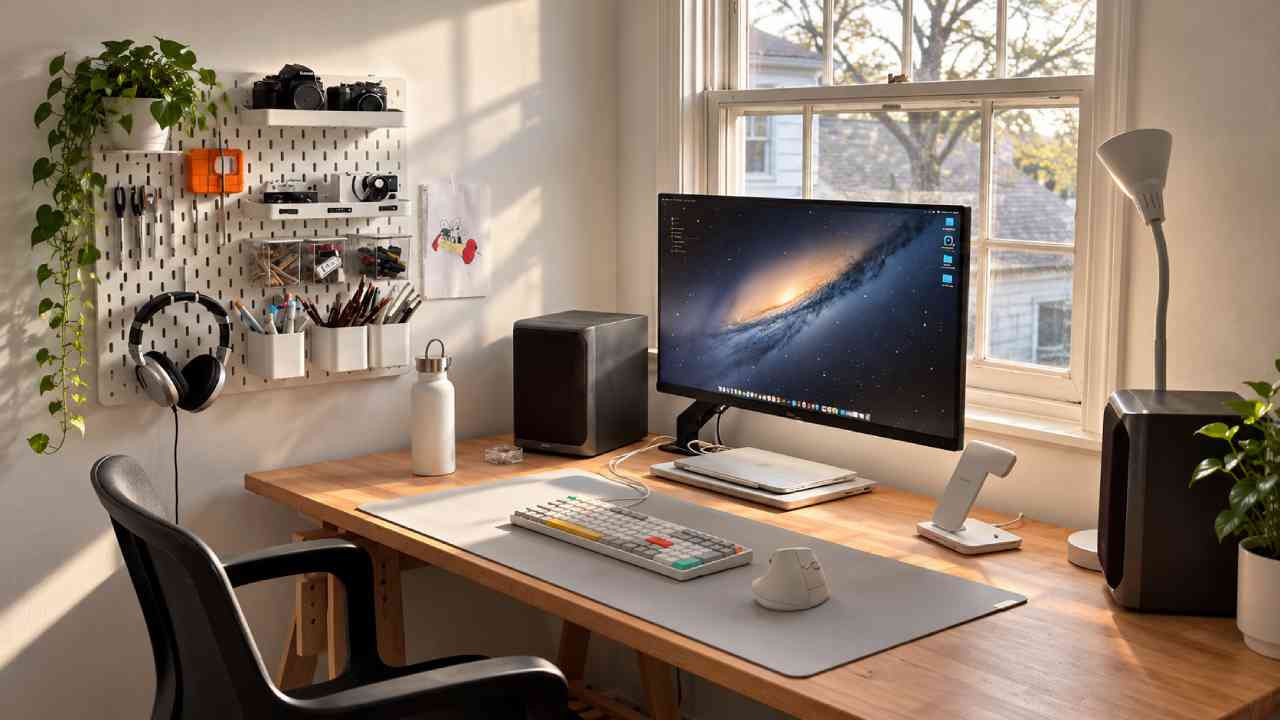
Minimalist interiors were once strongly associated with white surfaces, monochrome accessories, and almost empty rooms. Today, warmer interpretations have expanded that visual language. A Minimalist Workspace can combine simplicity with light wood, beige textiles, ceramic accessories, and green plants. These elements soften the environment without creating unnecessary clutter. Warm lighting can strengthen the effect, especially during evening work. Meanwhile, natural textures add visual depth even when the color palette remains restrained. This approach works particularly well in home offices because the workspace needs to coexist with personal living areas. A cold corporate aesthetic may feel out of place in a bedroom or apartment. Warm minimalism solves that problem by creating a space that looks organized but still feels lived in. Even one wooden desk, a small plant, and a soft desk lamp can change the mood significantly. Therefore, minimalist design does not need to sacrifice warmth, individuality, or creative character.
Small Rooms Can Benefit Most From Minimalist Design
Not every home has space for a dedicated office. Many people work from bedrooms, apartment corners, living rooms, or compact multipurpose spaces. In these situations, minimalism becomes particularly practical. A desk around the size needed for essential equipment can often provide enough room when the surface is organized carefully. Vertical storage can then take advantage of unused wall space. Floating shelves, pegboards, and compact cabinets can hold books or supplies without crowding the desk. Meanwhile, a monitor arm can free additional surface area when the setup includes a separate display. A Minimalist Workspace can also use furniture with built-in storage to reduce the number of separate pieces in the room. However, small-space design requires discipline. Adding too many decorative accessories can quickly undo the benefits. Instead, choose a few useful and attractive objects. With thoughtful planning, even a modest corner can become a functional workspace that feels intentionally designed rather than squeezed into the room.
Technology Can Blend Naturally Into Minimalist Interiors
Technology does not have to fight against minimalist design. In fact, modern devices can become part of the visual identity of the workspace. A slim monitor, laptop stand, compact keyboard, charging dock, and speakers can create a cohesive arrangement when positioned thoughtfully. However, buying gadgets purely for appearance can work against the minimalist philosophy. The better approach is to choose technology based on genuine needs. Someone who frequently joins video meetings may benefit from better lighting or a dedicated microphone. A designer may need a color-accurate monitor, while a writer might prefer a simple mechanical keyboard. These priorities should shape the desk. Matching accessories can create visual consistency, but perfect coordination is not essential. A Minimalist Workspace should remain flexible enough to support real work. Therefore, technology should simplify tasks rather than becoming another collection to manage. When devices have clear functions and designated places, the setup can remain visually calm without sacrificing modern capabilities.
Personal Details Prevent Minimalism From Feeling Too Sterile
A common misconception suggests that minimalism requires removing every decorative object. In reality, thoughtful decoration can give a workspace identity. The difference lies in selection. Instead of displaying many unrelated objects, choose a few pieces with personal meaning or visual purpose. A framed print can introduce color. A plant can bring a natural element to the desk. Meanwhile, a ceramic cup, small sculpture, or favorite book can make the space feel familiar. These details are especially useful in a creative home office because personality can influence how welcoming the environment feels. However, decoration should leave enough room for daily tasks. If objects constantly need to be moved before work begins, the setup may have become too crowded. A Minimalist Workspace finds a middle ground between expression and restraint. In many cases, one memorable object creates more impact than ten small decorations. That selective approach keeps the room personal without losing the clarity that defines minimalist design.
Organization Becomes Easier When Every Item Has a Place
Minimalist design is difficult to maintain without a simple organization system. A clean desk may look impressive on the first day, but everyday objects eventually return. Therefore, each frequently used item should have a predictable home. Pens can stay in one small holder, while documents can move into a drawer or vertical organizer. Chargers may live inside a cable tray or dedicated storage box. Headphones can hang from a discreet hook beneath the desk. These solutions reduce the effort required to reset the workspace after a busy day. Moreover, organization does not need to involve complicated systems. The best arrangement is often the one that requires the fewest steps. If an item is used several times each day, it should remain easy to reach. Less common tools can stay farther away. A Minimalist Workspace becomes sustainable when organization follows real habits. Instead of constantly fighting clutter, the design quietly guides objects back to their intended places.
The Modern Home Office Is Becoming More Intentional
The rise of the home office has changed how people think about personal workspaces. A desk is no longer simply a place to put a computer. It can influence the atmosphere of a room and shape everyday routines. A Minimalist Workspace responds to this shift by focusing on intentional choices. It removes what is unnecessary while giving greater attention to comfort, lighting, organization, and useful technology. More importantly, the concept remains flexible. One person may prefer warm wood and plants, while another chooses a monochrome desk with almost no decoration. Both can follow minimalist principles if every element serves a clear purpose. This freedom explains why the style continues to fit modern creative lifestyles. It can adapt to large offices, tiny apartments, bedrooms, and shared spaces. Ultimately, the strongest minimalist setup is not necessarily the most expensive or photogenic. It is the one that makes everyday work feel easier, calmer, and more enjoyable.