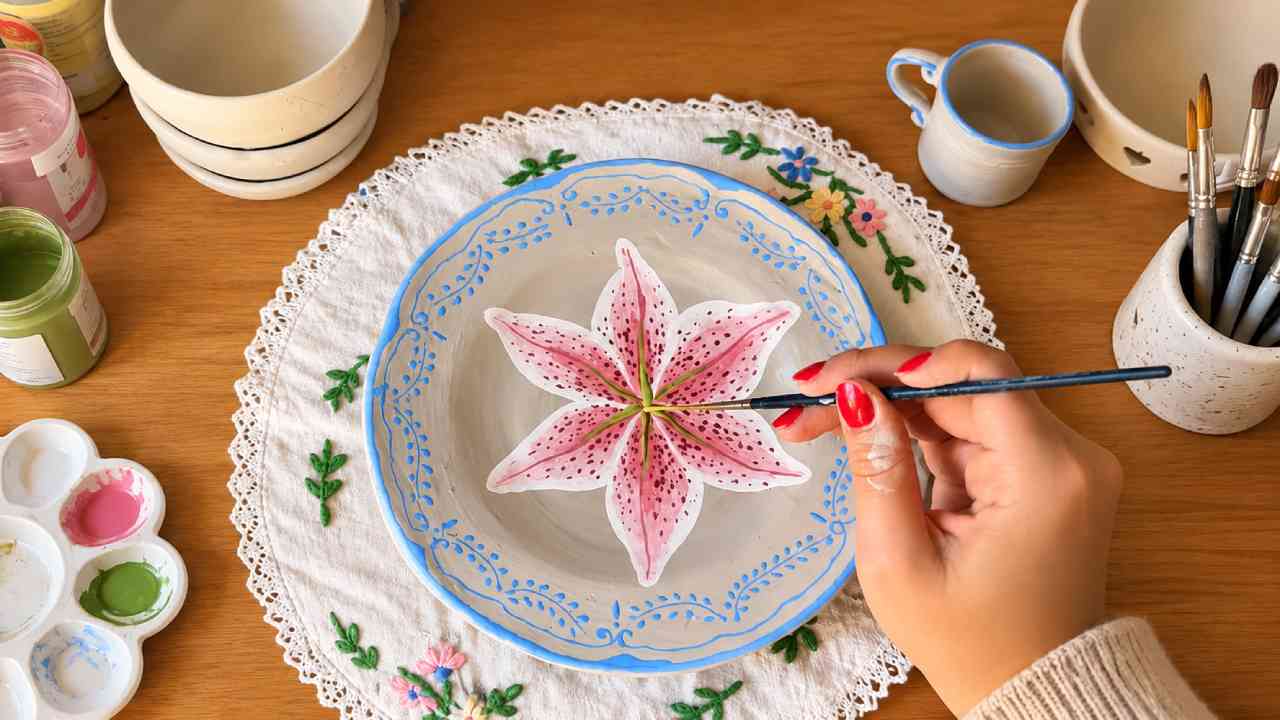
Mayumiotero – A plain white plate may look ordinary at first. However, a few thoughtful colors can completely change its character. Ceramic Plate painting gives everyday tableware a personal and artistic touch. Flowers, fruit, abstract lines, and playful patterns can transform a simple surface into something unique. More importantly, the activity does not always require advanced drawing skills. Beginners can start with dots, curved lines, leaves, or small geometric shapes. Meanwhile, experienced painters can explore detailed illustrations and layered patterns. The process also encourages people to slow down and focus on one object at a time. That makes the activity feel different from fast digital entertainment. In my view, this balance between creativity and function makes ceramic painting especially appealing. The finished piece can become decorative art or, when made with a suitable food-safe ceramic process, functional tableware. Therefore, creativity can become part of everyday living rather than remaining inside a sketchbook.
Simple Designs Can Make a Ceramic Plate Feel Unique
Complex artwork is not necessary to create an attractive Ceramic Plate. In fact, simple designs often look more confident and modern. A thin blue border can give a plate a Mediterranean character. Small red cherries can create a playful retro mood. Likewise, green leaves can bring a calm botanical feeling. Before painting, it helps to decide on a limited color palette. Two or three main colors can make the design feel more consistent. Next, consider how much empty space should remain visible. Covering every section is not always the best approach. Negative space can make small illustrations stand out more clearly. Beginners can also sketch a basic layout before adding color. However, the design does not need to become perfectly symmetrical. Handmade work often looks appealing because small variations remain visible. As a result, every painted plate can carry the personality of its maker while still looking polished.
The Creative Process Starts Before the First Brushstroke
Good ceramic painting begins with an idea rather than a brush. First, think about how the finished plate should feel. A cheerful design may use strawberries, lemons, flowers, or colorful dots. Meanwhile, a minimalist concept may feature only thin lines and muted shapes. Inspiration can come from nature, vintage tableware, textiles, travel, or everyday objects. A small mood board can help organize those references. After that, consider the shape and size of the plate. A wide rim provides a natural area for decorative borders. In contrast, a large flat center gives more room for illustrations. Planning also prevents the composition from feeling crowded. Still, there should be room for spontaneity. Some of the most charming details appear while painting rather than during the planning stage. Therefore, use the initial sketch as a guide instead of a strict rule. This approach keeps the project organized without removing the playful side of creative work.
Read Also: PHP2Shell Case Shows Why Fast Patching Is No Longer Enough
Different Ceramic Surfaces Require the Right Materials
Choosing suitable materials is one of the most important parts of Ceramic Plate painting. Ceramic decoration can involve different surfaces and processes. For example, pottery studios often provide bisque-fired pieces that are decorated with compatible underglazes or ceramic colors. The studio then applies the appropriate glaze and completes the required kiln firing. In contrast, craft paints or paint markers may be designed only for decorative projects. Their instructions can differ greatly. Therefore, one product should never be assumed to work like another. Always follow the manufacturer’s directions for the exact material being used. This point becomes especially important when the finished plate may touch food. A decorative finish is not automatically suitable for food-contact surfaces. Likewise, a handmade plate should not automatically be considered microwave or dishwasher safe. When functionality matters, use a tested ceramic system and follow the studio or manufacturer’s guidance for firing, glazing, and intended use.
Botanical and Fruit Motifs Bring Fresh Energy to Tableware
Nature provides endless inspiration for ceramic painting. Small daisies can create a cheerful spring look, while olive branches offer a calmer style. Lemons and oranges can bring Mediterranean energy to a Ceramic Plate. Meanwhile, strawberries, cherries, and blueberries create playful designs that work well on smaller dishes. These motifs are also easy to simplify. A lemon, for example, can begin as a yellow oval with two green leaves. A flower can start with several basic brush marks around a small center. Therefore, beginners do not need to reproduce realistic botanical illustrations. Stylized shapes often look more distinctive on handmade tableware. Color choice also changes the overall mood. Bright yellow and cobalt blue can feel energetic. On the other hand, earthy green and warm brown can create a softer appearance. By repeating one motif around the rim, even a very simple illustration can develop into a cohesive pattern.
Abstract Patterns Offer an Easy Entry for Beginners
Not everyone feels comfortable drawing flowers or detailed objects. Fortunately, abstract patterns provide another creative direction. Wavy lines, checkerboards, dots, arches, and irregular shapes can produce striking results. These patterns also allow beginners to focus on color and composition rather than realistic drawing. For instance, a Ceramic Plate can feature several curved lines around its rim. Another design might combine small dots with bold blocks of color. The key is repetition. Repeating a simple element creates visual rhythm and makes the final design appear intentional. However, perfect repetition is unnecessary. Slight differences in line thickness or shape can emphasize the handmade character. In addition, abstract painting encourages experimentation. A painter can test unusual color combinations without worrying about whether an object looks realistic. This freedom makes the activity less intimidating. As confidence grows, simple abstract elements can also be combined with flowers, fruit, lettering, or other illustrations.
Small Imperfections Give Handmade Plates Their Character
Mass-produced tableware usually aims for perfect consistency. Handmade pieces tell a different story. A brushstroke may become slightly thicker in one area. A flower may lean to one side. Likewise, two painted leaves may not have exactly the same shape. These details do not automatically make the work unsuccessful. Instead, they can show that a real person created the object. Of course, craftsmanship still matters. Smudges, unsuitable materials, or poor finishing can affect the final result. However, minor visual variations are different from technical mistakes. Learning to recognize that difference can make creative work more enjoyable. Many beginners become frustrated because their Ceramic Plate does not resemble a factory-made product. Yet, copying machine-like perfection removes some of the charm of handmade design. A more useful goal is creating a balanced composition with clean colors and a clear visual idea. Personal character can then remain visible within the finished piece.
Ceramic Painting Can Become a Relaxing Weekend Ritual
Creative hobbies often become meaningful because of the experience surrounding them. Ceramic painting is a good example. Imagine a quiet weekend table with several brushes, a palette of colors, and a blank plate waiting nearby. The activity encourages attention to small movements. Each line requires a little focus, while each color choice creates another decision. Therefore, the process can provide a welcome change from constantly switching between screens and notifications. It also works well as a social activity. Friends can paint different plates while sharing ideas and conversation. Couples may enjoy it as a creative date. Families can also adapt simple projects for appropriate ages with suitable materials and supervision. Moreover, the finished pieces become reminders of the experience. A painted plate may recall a weekend workshop or an afternoon spent with friends. That emotional connection gives handmade objects a value that goes beyond decoration alone.
Creative Plate Painting Can Reflect Personal Style at Home
Tableware contributes more to interior style than many people realize. Plates can introduce color, pattern, and personality to a dining space. Handmade designs make that connection even stronger. Someone who enjoys minimalist interiors may choose thin black lines on a neutral Ceramic Plate. In contrast, a maximalist home may welcome bold flowers and contrasting colors. Coastal interiors can inspire blue waves, shells, or fish motifs. Meanwhile, vintage-inspired spaces can use scalloped borders and small floral patterns. Painted pieces do not always need to sit inside a cupboard. Decorative plates can also become part of a wall display when they are designed and mounted appropriately. Several plates with related colors can form a small gallery. As a result, the same creative activity can influence both dining and home decoration. This flexibility helps ceramic painting fit naturally within a broader creative lifestyle.
Thoughtful Finishing Matters as Much as the Painted Design
Finishing determines how a painted ceramic project should be used. This stage depends on the ceramic body, decoration material, glaze, and firing process. Therefore, there is no single finishing method for every painted plate. In a pottery studio, staff may provide bisqueware, compatible decorating materials, glaze, and kiln firing. Home craft products may follow a completely different process. Their labels may restrict the finished item to decorative use. Consequently, the safest approach is to follow the exact product or studio instructions. Pay particular attention to food-contact claims. If a material is not specifically intended for food-contact surfaces, keep it away from areas that will touch food. Decorative pieces can still look beautiful on shelves or walls. For functional tableware, however, use a ceramic system intended for that purpose. Careful finishing protects the original design and ensures the final object is used in the way its materials were designed to support.
Ceramic Plate Painting Fits Naturally Into a Creative Lifestyle
Creative lifestyle does not have to mean producing complicated artwork every day. Sometimes, it begins by giving an ordinary object more personality. Ceramic Plate painting captures that idea particularly well. The activity combines visual design, hands-on work, and practical objects within one project. Moreover, it offers many levels of difficulty. A beginner can start with colorful dots, while an experienced artist may paint detailed botanical scenes. The hobby can also evolve over time. One painted plate may lead to matching bowls, mugs, serving dishes, or decorative tiles. However, the most interesting part is not necessarily building a perfect collection. The process itself encourages experimentation and personal expression. In a world filled with identical household products, handmade details can make everyday spaces feel more individual. A simple plate becomes a small canvas. With thoughtful materials and a creative idea, that everyday object can carry a story that feels entirely personal.