Mayumiotero – Quantum Dot Display technology gives modern screens a more precise way to manage brightness and color. Quantum dots are tiny semiconductor particles that react to light and produce specific colors. Their optical properties help displays create vivid reds, greens, and blues with greater control. As a result, manufacturers can achieve wider color ranges without simply increasing saturation. The technology already supports several commercial display designs. Meanwhile, researchers continue to develop self-emissive quantum-dot pixels for future screens. Therefore, quantum dots now influence more than premium televisions. They also attract attention for monitors, AR systems, and compact visual devices. In my view, this broader role makes the technology especially relevant in 2026.
Read Also: NVIDIA Acquires Hugging Face, Raising Big Questions for Open-Source AI
Tiny Nanocrystals Produce More Controlled Colors
Quantum dots measure only a few nanometers, yet they can strongly influence image quality. When these particles receive energy, they emit light at specific wavelengths. Engineers can control those wavelengths through the size and composition of each quantum dot. Consequently, displays can produce cleaner primary colors. This precision also reduces unnecessary overlap between red, green, and blue light. Moreover, narrow color emission can support a wider color gamut. However, quantum dots do not determine picture quality alone. Image processing, calibration, panel design, and backlighting still matter. Therefore, consumers should evaluate the entire display instead of focusing on one technology label. Quantum dots provide a powerful foundation, but manufacturers must integrate them carefully to achieve their full potential.
Modern QLED Screens Still Need a Clear Explanation
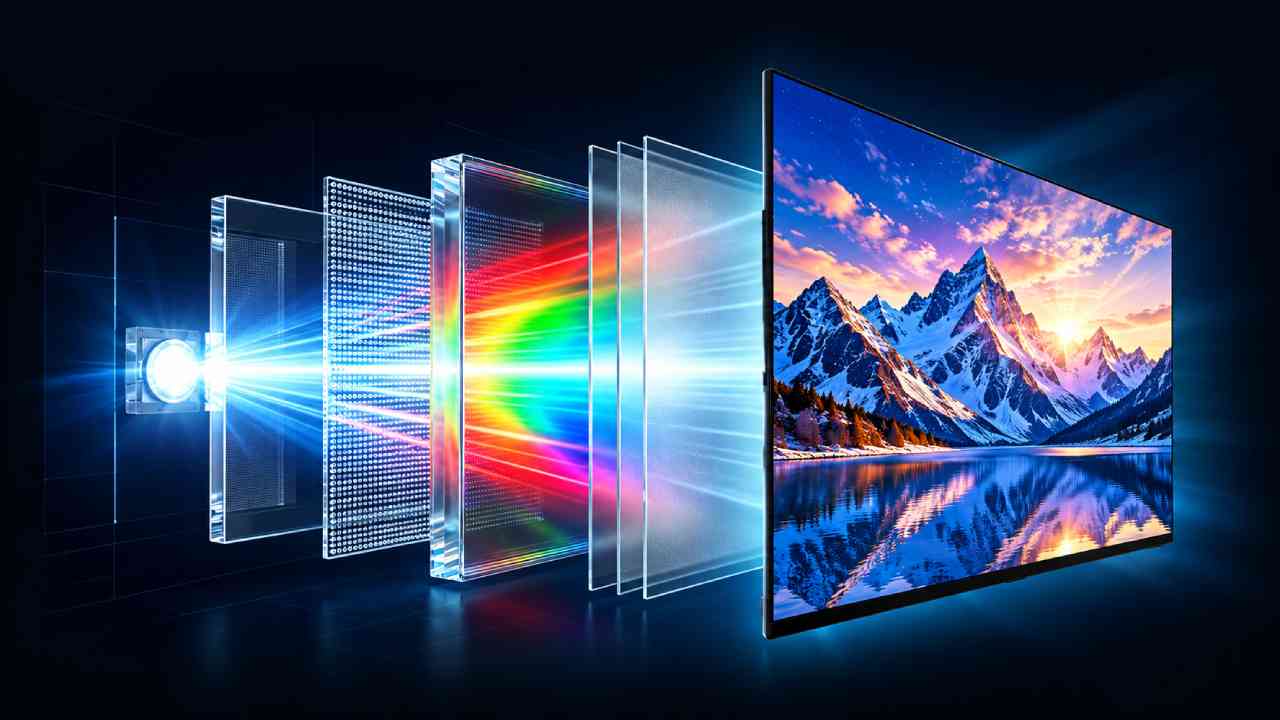
Many consumers connect the term QLED directly with quantum dots. However, most commercial QLED televisions still combine quantum-dot materials with LCD technology and a separate light source. In this design, quantum dots help convert incoming light into more precise colors. The LCD panel then controls how the final image appears. Self-emissive quantum-dot displays work differently. Their pixels create light directly when electricity reaches them. Therefore, they do not use quantum dots only as a color-conversion layer. This difference matters because both systems may use similar terminology. Yet their internal structures remain very different. A clear explanation helps readers avoid confusion. It also makes comparisons between QLED, OLED, QD-OLED, and future EL-QD displays much easier to understand.
Brightness Matters More When Color Remains Accurate
Brightness often attracts attention because manufacturers highlight it in product specifications. However, a bright screen only becomes useful when it also preserves accurate color and good contrast. Quantum dots help because they can produce narrow and controlled color output. As brightness rises, well-designed quantum-dot systems can maintain strong color intensity. This advantage matters for HDR movies, gaming, and bright indoor environments. Moreover, higher brightness can improve highlight detail in scenes with strong light sources. Still, brightness alone does not guarantee better image quality. Excessive output can make pictures look harsh when calibration falls behind. Therefore, manufacturers must balance luminance, contrast, and color accuracy. A successful display combines these elements instead of chasing one impressive number.
Precise Color May Become the Strongest Advantage
Color precision could become one of the most important strengths of Quantum Dot Display technology. Quantum dots produce light within a narrow spectral range. Therefore, each primary color can appear cleaner and more controlled. This characteristic helps engineers target wider color spaces while keeping colors distinct. Moreover, precise color matters in many situations. Filmmakers want viewers to see tones close to the original creative intent. Photographers need reliable color when editing images. Gamers also benefit from clear differences between bright effects, shadows, and environmental details. However, wide color gamut and accurate color are not identical. Calibration still plays a major role. For that reason, quantum dots should support accurate reproduction rather than exaggerated saturation. That balanced approach creates a more realistic visual experience.
Self-Emissive Quantum Dots Point Toward Future Screens
One of the most interesting developments involves electroluminescent quantum-dot technology, often called EL-QD or QD-LED. In this approach, quantum-dot pixels produce light directly when an electrical current activates them. As a result, the display no longer needs quantum dots only to convert another light source. Researchers see this architecture as a possible path toward advanced self-emissive screens. Moreover, it could combine strong brightness with precise color. However, technical challenges still remain. Engineers need better lifetime, manufacturing consistency, and production efficiency before the technology can reach a broader market. Therefore, consumers should view EL-QD as an emerging direction rather than an immediate replacement for existing OLED or LCD products. Even so, its progress remains worth watching.
High Pixel Density Creates New Opportunities for AR
Quantum-dot technology also has potential beyond large televisions. AR and VR devices need extremely dense displays because the screens sit close to the user’s eyes. Therefore, engineers must create tiny pixels without losing brightness or color precision. Quantum dots offer an attractive option because they can deliver strong color output from very small structures. Researchers also study several ways to create fine pixel patterns, including printing and photolithography. These techniques could support compact displays with much higher pixel density. However, manufacturing them at scale remains difficult. Small defects can affect uniformity and image quality. As a result, progress in patterning technology may become just as important as improvements in the quantum-dot materials themselves.
Manufacturing Still Determines Commercial Success
A promising display material must work reliably outside the laboratory. Manufacturers need high production yields, stable performance, consistent color, and reasonable costs. Quantum-dot displays still face challenges in these areas. Engineers must place millions of tiny pixels with extreme precision. They must also protect the materials during manufacturing. Moreover, each production step can influence brightness and lifetime. Several techniques may help, including inkjet printing, transfer methods, and advanced photolithography. However, no single process solves every problem. Therefore, commercial success will depend on more than laboratory performance. In practice, manufacturers need a process that combines speed, accuracy, durability, and cost control. Those practical factors often decide whether a new display technology reaches everyday consumers.
Read Also: Zen Garden Brings Japanese Simplicity Into Modern Outdoor Spaces
Quantum Dot Technology Can Serve Many Devices
Quantum dots can support more than televisions. Manufacturers can use similar principles in monitors, automotive displays, mobile devices, and future AR systems. Each category, however, creates different requirements. A television needs strong HDR performance and wide color reproduction. An automotive screen must remain visible under changing daylight conditions. Meanwhile, an AR display needs extreme pixel density in a very small area. Therefore, one quantum-dot architecture may not fit every product. Instead, companies can adapt the technology to specific use cases. This flexibility gives quantum dots an important advantage. They can improve existing display systems while researchers also develop new self-emissive versions. As a result, the technology can influence both current products and future screen designs.
OLED and MicroLED Remain Strong Competitors
Quantum dots do not develop in isolation. OLED already offers self-emissive pixels, deep blacks, fast response times, and mature commercial products. MicroLED also attracts attention because of its brightness and durability potential. Therefore, Quantum Dot Display technology must compete with strong alternatives. Interestingly, the industry may not choose only one winner. Hybrid systems can combine different materials to gain specific advantages. QD-OLED already shows how manufacturers can combine quantum-dot color conversion with OLED light emission. Future products may follow a similar strategy. In my view, this competition benefits consumers because it encourages faster improvements in brightness, efficiency, color, and reliability. The most successful technology will likely depend on the device category, price, and production scale.
Quantum Dot Display Continues to Build Momentum in 2026
Quantum Dot Display technology continues to move forward because it addresses several important visual goals at once. It can support brighter images, wider color ranges, and more controlled color reproduction. At the same time, researchers continue to explore direct-emission quantum-dot pixels and high-density applications. However, mass production still requires progress in lifetime, uniformity, and cost. Therefore, the technology should not be treated as an instant replacement for every existing display type. Its real importance comes from flexibility. Quantum dots can improve current LCD-based systems while also supporting experimental self-emissive architectures. That combination gives the technology a strong position in the evolving display market. For readers following visual technology in 2026, quantum dots remain one of the most interesting developments to watch.