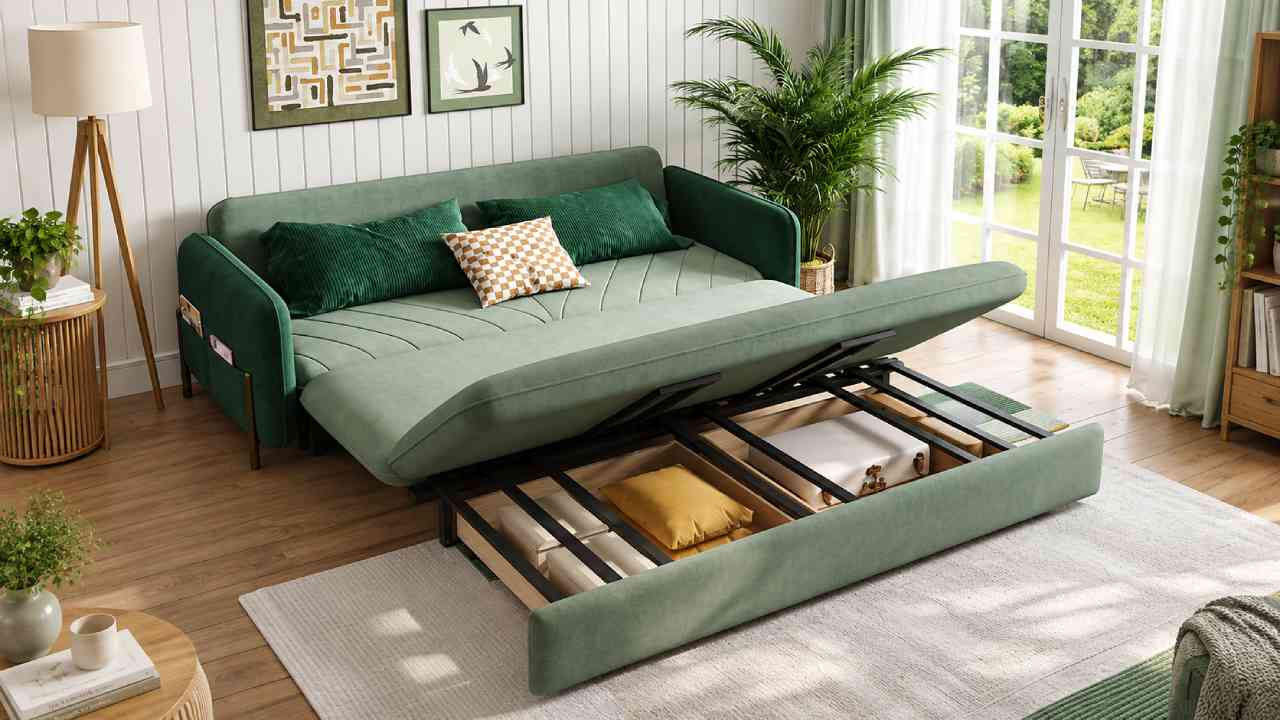
Mayumiotero – Convertible Furniture is changing how people think about limited living space. Instead of filling a compact apartment with separate pieces for every activity, one well-designed item can serve several purposes. A sofa can become a bed, while a coffee table can expand into a dining table. Meanwhile, a wall unit may hide both storage and a workspace. This flexibility is especially useful in studio apartments, tiny homes, and multifunctional rooms. However, the appeal goes beyond saving floor space. Convertible designs allow a room to respond to different moments of the day. A living area can become an office in the morning and a bedroom at night. In my view, this adaptability reflects modern life better than rigid room layouts. People increasingly want homes that work efficiently without feeling crowded. Therefore, multifunctional furniture offers a practical way to create comfortable interiors while keeping the visual environment clean, open, and intentional.
Read Also: Potentiometer vs Hall Effect vs TMR: Which Analog Stick Is Better?
Small Homes Are Encouraging Smarter Design Choices
Living in a smaller home does not necessarily mean accepting an uncomfortable lifestyle. Instead, limited space often encourages more thoughtful decisions. Every table, chair, cabinet, and storage unit needs a clear purpose. As a result, designers are exploring ways to make individual pieces work harder. Convertible Furniture fits naturally into this approach because it reduces the need for several permanent items. For example, a large dining table may occupy valuable floor space even when nobody is using it. A compact transforming table can remain small during most of the day, then expand when guests arrive. Similarly, a folding desk can disappear after working hours. These solutions help maintain visual breathing room. Moreover, they can reduce unnecessary clutter when paired with good storage habits. The most successful small interiors are not simply packed with clever mechanisms. They balance function, circulation, comfort, and appearance. That balance is what turns limited square footage into a home that genuinely feels pleasant to use.
Sofa Beds Have Evolved Beyond Basic Guest Furniture
The sofa bed is one of the most familiar examples of multifunctional furniture. Yet modern versions can look very different from the bulky designs many people remember. Today, designers often hide the transforming mechanism beneath streamlined upholstery and simple silhouettes. During the day, the piece functions as an ordinary sofa. At night, it can provide an additional sleeping area without requiring a separate guest room. Consequently, this design works particularly well in studios and compact apartments. However, appearance should not be the only consideration. Seat depth, mattress support, frame construction, and ease of operation all influence everyday comfort. A beautiful sofa bed becomes frustrating if converting it requires too much effort. Therefore, buyers should test the mechanism whenever possible. From a design perspective, the best convertible sofa does not advertise its second function. Instead, it integrates naturally into the room and reveals its versatility only when needed.
Transforming Tables Give One Surface Several Purposes
Tables occupy more space than many homeowners realize. A dining table needs room not only for its surface but also for chairs and circulation. Therefore, a transforming table can make a noticeable difference in compact interiors. Some designs begin as low coffee tables before rising to dining height. Others use hidden extensions that increase the tabletop when more seats are required. Meanwhile, wall-mounted versions can fold away almost completely. This flexibility allows the same area to support breakfast, remote work, dinner, or social gatherings. However, a successful transforming table needs a stable mechanism. Movement should feel controlled rather than fragile, especially when the surface holds food, laptops, or other valuable items. Materials also matter because repeated folding and sliding can place stress on joints. In my opinion, transforming tables demonstrate the strongest principle behind Convertible Furniture: good design does not merely make an object smaller. It gives the object a meaningful second life when circumstances change.
Wall Beds Can Turn Bedrooms into Daytime Living Areas
A bed is usually the largest piece of furniture in a small bedroom or studio. Unfortunately, it also remains unused for much of the day. Wall beds address this problem by allowing the mattress platform to fold vertically or horizontally into a cabinet structure. Once stored, valuable floor area becomes available for other activities. Modern systems can go further by integrating sofas, shelving, desks, or lighting. Therefore, a single wall can support several functions without making the room feel permanently occupied by a bed. Safety and installation quality are especially important here because these systems involve large moving components. Proper anchoring and reliable hardware should always take priority over visual novelty. Moreover, users need enough clearance to operate the system comfortably. When designed correctly, a wall bed can transform the character of an apartment. The room stops being defined by one purpose and becomes a flexible environment that changes between daytime and nighttime routines.
Hidden Storage Makes Multifunctional Rooms Feel Calmer
Transformation is useful, but storage often determines whether a small room actually feels organized. A convertible desk cannot create a calm living area if paperwork remains scattered after it closes. Therefore, designers increasingly combine multifunctional furniture with concealed storage. Benches may contain compartments beneath their seats, while beds can include drawers or lifting platforms. Coffee tables can hide blankets, books, chargers, or remote controls. In addition, modular wall units can combine cabinets with folding desks and display shelves. These solutions allow everyday objects to remain accessible without dominating the room visually. However, hidden storage works best when it has a specific purpose. Random compartments can quickly become places where clutter simply disappears from sight. Thoughtful organization is still necessary. In practice, I find the strongest designs are those that make storage intuitive. Frequently used items should remain easy to reach, while occasional belongings can occupy deeper compartments. This creates a cleaner interior without sacrificing everyday convenience.
Technology Is Making Convertible Designs More Sophisticated
Traditional convertible furniture depends on hinges, sliding tracks, springs, and manual lifting mechanisms. However, newer designs can incorporate motors, sensors, and electronically controlled movement. A bed may descend from an elevated position, for example, while the living area underneath remains usable during the day. Motorized partitions can also change how rooms are divided. Although these ideas appear futuristic, technology should solve a genuine problem rather than exist as a gimmick. More moving components can increase maintenance requirements and create additional points of failure. Therefore, reliability, manual overrides, safety sensors, and service access deserve careful consideration. Mechanical systems can sometimes be the better choice because they are simpler to repair. On the other hand, motorized Convertible Furniture can improve accessibility when lifting heavy components manually would be difficult. The best solution depends on the user, budget, and frequency of transformation. Ultimately, technology is valuable when it makes the furniture easier and safer to use every day.
Read Also: LEGO Art Ideas That Turn Simple Bricks Into Creative Decor
Good Convertible Furniture Must Balance Beauty and Function
A clever mechanism alone does not create good furniture. The piece must also feel comfortable, durable, and visually appropriate for the room. This requirement can be challenging because multifunctional designs often contain additional hardware. Designers need to hide or integrate those components without making the furniture bulky. Materials also play an important role. Strong frames, reliable hinges, and durable surfaces are particularly valuable because convertible pieces experience repeated movement. Meanwhile, rounded forms, natural wood, neutral upholstery, and clean lines can help multifunctional furniture blend into modern interiors. Nevertheless, buyers should avoid choosing a product based only on an impressive transformation video. The object will spend most of its life in one of its normal configurations. Therefore, every mode should work properly. A dining table should feel like a real dining table, just as a sofa bed should remain comfortable as a sofa. Successful design occurs when versatility enhances the experience instead of creating compromises everywhere else.
Convertible Furniture Can Support More Sustainable Consumption
Multifunctional design can also encourage a more considered approach to consumption. If one durable piece performs several jobs, homeowners may need fewer individual items. That does not automatically make every convertible product sustainable. Materials, manufacturing, transportation, repairability, and product lifespan still matter. However, the underlying principle has potential. Buying one long-lasting table that adapts to changing needs may be more practical than replacing several temporary pieces over time. Furthermore, modular components can extend usefulness when a household moves or its needs change. Repairable hardware is especially important because a broken mechanism should not turn an otherwise functional piece into waste. For this reason, quality deserves attention alongside style and price. Convertible Furniture is most valuable when transformation extends the product’s usefulness rather than shortening its lifespan through unnecessary complexity. In that sense, adaptable design can encourage people to think less about owning more furniture and more about choosing furniture that continues to serve them well.
Flexible Furniture Reflects the Future of Modern Homes
Homes are increasingly expected to accommodate work, rest, entertainment, exercise, dining, and social life. Consequently, rooms with only one fixed purpose may feel less practical for many households. Convertible Furniture responds to this shift by allowing spaces to change without permanent construction. A compact apartment can feel larger when furniture disappears or transforms after use. Meanwhile, larger homes can benefit from the same flexibility by turning guest rooms into offices or creating adaptable family spaces. Yet the future of furniture is unlikely to depend on complicated mechanisms alone. The strongest designs will combine simplicity, durability, comfort, and intuitive movement. In my view, that is why this concept has lasting potential. It addresses a real challenge rather than merely introducing a new visual style. As homes continue to evolve, furniture that adapts with them can become increasingly useful. Ultimately, a well-designed small space is not defined by how much furniture it contains, but by how intelligently each piece supports everyday life.