Mayumiotero – AI Motion Capture Without Sensors: Animation Breakthrough is becoming one of the most exciting creative shifts in 2026 because it removes the biggest barrier in animation production. For years, motion capture meant expensive suits, markers, and studio setups that only large teams could afford. However, sensor-free AI motion capture now allows creators to capture realistic movement using a simple camera or even a smartphone. As a result, the technology feels less like a luxury tool and more like a new creative standard. In my opinion, this breakthrough matters because it does not only speed up workflows. It also opens the door for indie animators, small studios, and solo creators who want professional results without huge budgets. The animation world is not just evolving. It is becoming more accessible.
“Read Also: Creative Mindset Over Hustle Culture in 2026“
Why Sensor-Free Motion Capture Is a Big Deal in 2026
Sensor-free motion capture feels like a big deal because it changes who gets to create high-quality animation. In the past, motion capture required a controlled studio, multiple cameras, and a team to manage the setup. Therefore, the process often felt out of reach for small creators. In 2026, AI is rewriting that reality. Now, a creator can record movement in a normal room and still generate usable animation data. Additionally, this approach reduces time spent on technical preparation. As a result, teams can focus more on storytelling and character performance. In my view, this is the true win. The technology removes friction, which is often the enemy of creativity. When the workflow becomes simpler, people experiment more. They also produce more. That is why this breakthrough is not just technical. It is cultural.
How AI Turns Regular Video Into 3D Animation Data
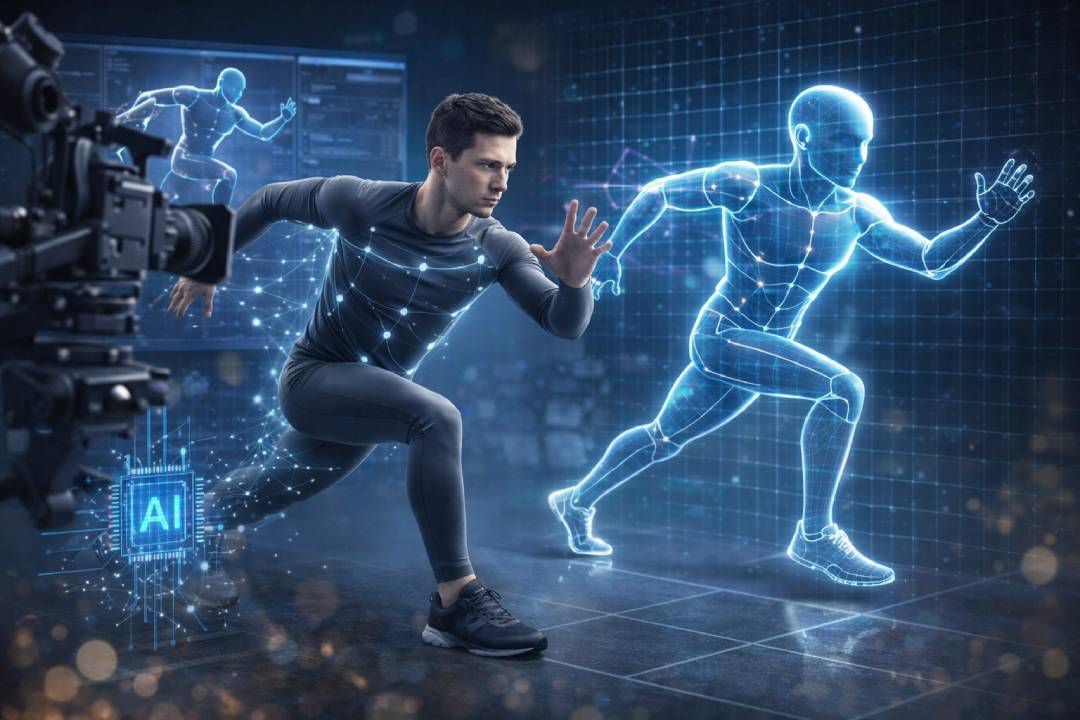
The technology works by analyzing video frames and identifying human poses in each moment. First, AI detects key body points such as shoulders, elbows, hips, and knees. Then, it tracks how these points move across time. After that, the system builds a digital skeleton and maps it into a 3D environment. Although the video itself is 2D, the AI predicts depth and rotation using trained motion patterns. In other words, it “guesses” the missing dimension based on learned data. Additionally, modern models improve stability by smoothing jitter and correcting unnatural joint movement. As a result, the output looks far more realistic than early versions of pose tracking. In my opinion, the most impressive part is the speed. What once took hours of manual keyframing can now happen in minutes. This makes sensor-free mocap feel like a real production tool, not just a demo.
The Creative Freedom It Gives to Indie Animators
For indie animators, this breakthrough feels like creative freedom. Many small creators have strong ideas but limited resources. They often rely on manual animation, which takes time and can drain energy. However, AI motion capture without sensors reduces that burden. Now, a solo creator can record acting, walking, fighting, or dancing and quickly translate it into animation. As a result, projects that once felt impossible become realistic. Additionally, this technology allows creators to experiment with performance. They can try multiple takes, adjust movement styles, and explore different emotions. In my view, this is where storytelling improves. Movement is not just motion. It is personality. When creators can capture natural performance, characters feel more alive. Therefore, sensor-free mocap does not only help production speed. It also improves the emotional quality of animation.
How Game Studios Benefit From Faster Motion Capture
Game studios benefit because they need huge volumes of animation. Modern games require characters to move naturally in many situations. That includes walking, running, climbing, fighting, and reacting to environments. In the past, studios either used expensive mocap sessions or reused animations repeatedly. However, sensor-free AI motion capture makes it easier to generate new movement quickly. As a result, developers can create more variety without breaking budgets. Additionally, teams can iterate faster. If a movement looks wrong, they can re-record and update it without scheduling a studio. In my opinion, this improves game realism. It also improves player immersion. Small details like how a character turns, breathes, or shifts weight can change how real the world feels. In 2026, studios want speed and realism at the same time. Sensor-free mocap helps them get both.
What Changes for Film and Cinematic Animation Workflows
In film and cinematic animation, this technology changes early-stage production. Traditionally, studios used mocap for final performance capture, which required heavy planning. However, sensor-free AI mocap can support previsualization and blocking much faster. Directors can test scenes early. Animators can build timing and camera movement with realistic motion. As a result, teams can make better decisions before expensive polishing begins. Additionally, this approach helps smaller studios produce cinematic quality. They can create believable movement without needing Hollywood-level budgets. In my view, the most exciting part is how it affects storytelling. When movement looks natural early, creators can focus on emotion, pacing, and character chemistry. That makes the final product stronger. In 2026, animation is no longer just technical. It is performance-driven. Sensor-free mocap supports that shift.
“Read Also: Retro and Minimalism Revival: Design Trends“
The Limitations: Where Sensor-Free Mocap Still Struggles
Even with rapid progress, sensor-free motion capture still has limitations. For example, hand movement remains difficult, especially when fingers interact with objects. Additionally, fast action scenes can cause tracking errors, especially when limbs overlap. Lighting and camera angles also matter. If the video is too dark or too shaky, the AI can misread body positions. As a result, creators still need cleanup and refinement in some cases. In my opinion, this is not a dealbreaker. It is simply part of the evolution. Early mocap systems also had flaws. Over time, they improved through better hardware and software. The same will happen here. What matters is that sensor-free mocap already works well enough for many real projects. In 2026, creators do not need perfection. They need speed, accessibility, and a solid base to build on. This technology delivers that.
Why This Breakthrough Will Shape the Next Generation of Creators
This breakthrough will shape the next generation because it changes how people learn animation. Students and beginners can now practice motion capture at home. They do not need access to studios or expensive equipment. As a result, education becomes more equal. Additionally, more creators can experiment early, which accelerates skill growth. In my view, this is how creative industries evolve. When tools become accessible, talent multiplies. We will likely see more indie films, short animations, and game prototypes with impressive character movement. That content will also inspire more people to join the industry. Therefore, the impact goes beyond technology. It changes the culture of animation. It creates a world where performance capture is not limited to big studios. In 2026, that feels like a real creative revolution.
What the Future Looks Like After This Innovation
The future after this innovation looks fast, flexible, and highly creative. Sensor-free mocap will likely integrate deeper into popular animation pipelines. It will also combine with generative AI tools that refine motion styles. For example, creators may capture basic movement, then apply different animation aesthetics automatically. Additionally, real-time mocap could become more common, allowing creators to see animated characters move instantly. In my opinion, the biggest shift will be emotional. When tools remove technical barriers, creators can focus on storytelling. They can spend more time writing, directing, and designing characters. That is where real value lives. In 2026, the animation world is moving toward performance, emotion, and authenticity. Sensor-free AI motion capture supports that direction perfectly. It is not just a breakthrough. It is the beginning of a new creative era.