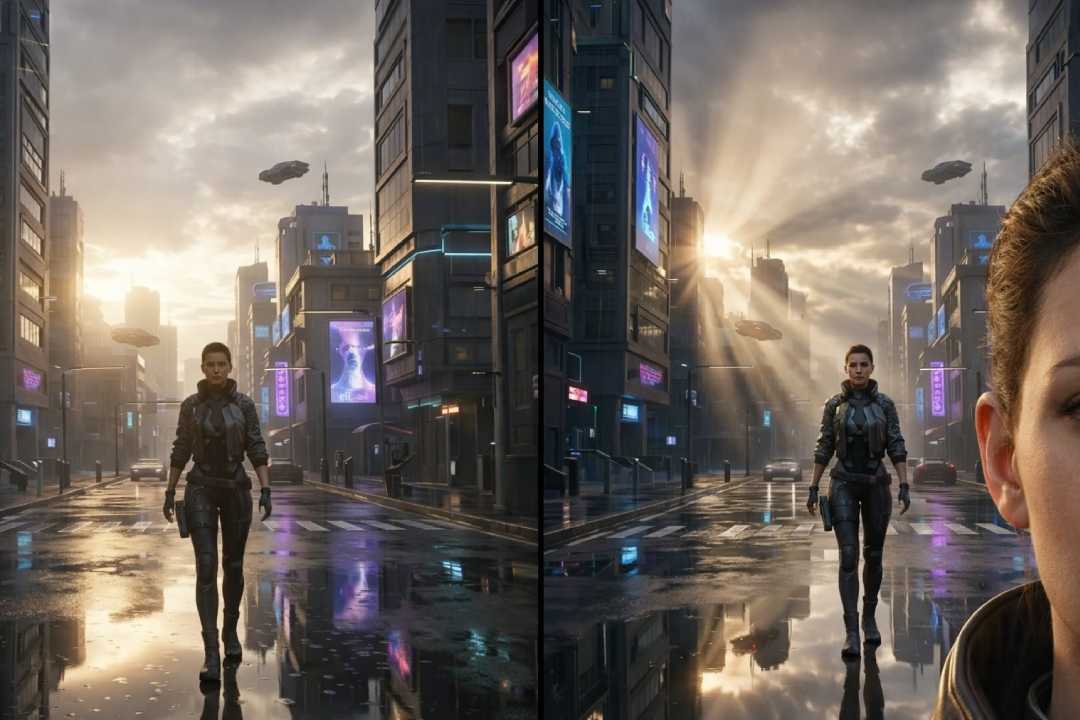
Mayumiotero – DLSS 5: AI Technology That Transforms the way we experience digital visuals is no longer just a concept—it is a real shift happening right now. At first glance, it may seem like another incremental upgrade in graphics technology. However, as we explore deeper, this innovation reveals a completely different paradigm. Instead of relying solely on raw GPU power, DLSS 5 introduces artificial intelligence as a co-creator of visual reality. Consequently, the gap between cinematic visuals and real-time gameplay begins to disappear. From a personal perspective, this feels like the moment when graphics stopped being purely technical and started becoming intelligent.
“Read Also: Nvidia’s new AI agent tools and computing platform updates signal“
Understanding the Evolution from Traditional Rendering to AI-Assisted Visuals
To fully appreciate DLSS 5, we must first look at how rendering used to work. Traditionally, GPUs processed every pixel manually, which required immense computational power. As a result, developers often had to compromise between performance and visual quality. However, DLSS 5 changes this approach significantly. Instead of calculating every detail, AI predicts and enhances missing elements in real time. Therefore, the workload shifts from brute-force computation to intelligent reconstruction. In my view, this transition is similar to moving from manual craftsmanship to assisted precision, where efficiency and quality finally coexist.
How DLSS 5 Uses AI to Reconstruct Reality in Real Time
At its core, DLSS 5 leverages neural networks trained on massive datasets. These models learn how high-quality images should look and then apply that knowledge instantly during gameplay. As a result, lower-resolution frames are transformed into ultra-detailed visuals without noticeable delays. Moreover, lighting, textures, and shadows are refined dynamically, which enhances realism significantly. From an analytical standpoint, this approach reduces rendering cost while increasing visual fidelity. Interestingly, it also opens new creative possibilities for developers who no longer need to manually design every micro-detail.
Why DLSS 5 Feels Like a Cinematic Breakthrough in Gaming
One of the most noticeable impacts of DLSS 5 is its cinematic quality. Games now resemble high-budget films, with lifelike lighting and fluid motion. Furthermore, character expressions appear more natural, which strengthens emotional immersion. Because of this, storytelling in games becomes more compelling. In my opinion, this is where technology meets art. Instead of simply improving graphics, DLSS 5 enhances the entire narrative experience. Consequently, players are no longer just interacting with a game—they are stepping into a believable digital world.
Performance Efficiency: High Frame Rates Without Sacrificing Detail
While visual quality improves dramatically, performance also benefits. DLSS 5 increases frame rates by reducing the computational burden on GPUs. Therefore, players can enjoy smoother gameplay even on mid-range hardware. Additionally, this efficiency makes high-end visuals more accessible to a wider audience. From a practical perspective, this is a major advantage. It removes the traditional barrier where only expensive systems could deliver premium graphics. As a result, the gaming ecosystem becomes more inclusive and scalable.
The Shift from GPU-Centric to AI-Centric Graphics Processing
Another important aspect of DLSS 5 is the shift in technological philosophy. Previously, GPUs were the sole drivers of visual output. However, AI now plays an equally critical role. This shift indicates a broader trend in computing, where intelligence replaces brute force. In my analysis, this transformation will influence not only gaming but also industries like film, architecture, and virtual simulations. Consequently, we are entering an era where visuals are not just rendered—they are intelligently generated.
Challenges and Debates Around AI-Generated Visuals
Despite its advantages, DLSS 5 is not without controversy. Some critics argue that AI-generated visuals can feel slightly artificial. This phenomenon, often referred to as the “uncanny effect,” raises questions about authenticity. Moreover, purists believe that traditional rendering offers more artistic control. However, it is important to note that every technological leap faces initial resistance. From my perspective, the key lies in balance. Developers must combine AI efficiency with human creativity to achieve the best results.
“Read Also: Farmhouse Design Cozy and Warm Country Beauty“
The Impact of DLSS 5 on Game Development and Production Costs
From a development standpoint, DLSS 5 introduces significant efficiency. Since AI handles many visual enhancements, developers can focus more on gameplay and storytelling. As a result, production timelines may shorten, and costs could decrease. Furthermore, smaller studios gain the ability to compete with larger companies in terms of visual quality. This democratization of technology is particularly exciting. In my opinion, it could lead to a surge in creative and diverse gaming experiences across the industry.
DLSS 5 and the Future of Immersive Digital Experiences
Looking ahead, DLSS 5 represents more than just a graphics upgrade. It is a foundation for future immersive technologies, including virtual reality and the metaverse. As visuals become indistinguishable from reality, user experiences will evolve dramatically. Additionally, industries beyond gaming will adopt similar AI-driven rendering techniques. Therefore, the influence of DLSS 5 will extend far beyond entertainment. From a long-term perspective, this technology is shaping how humans interact with digital environments in everyday life.
Why DLSS 5: AI Technology That Transforms Matters for the Next Generation
Ultimately, DLSS 5: AI Technology That Transforms is not just about better graphics—it is about redefining how visuals are created and experienced. It bridges the gap between imagination and reality, enabling richer and more immersive worlds. Moreover, it signals a future where AI becomes an integral part of creative processes. From my viewpoint, this is only the beginning. As AI continues to evolve, the boundaries of visual technology will expand even further, unlocking possibilities we have yet to imagine.