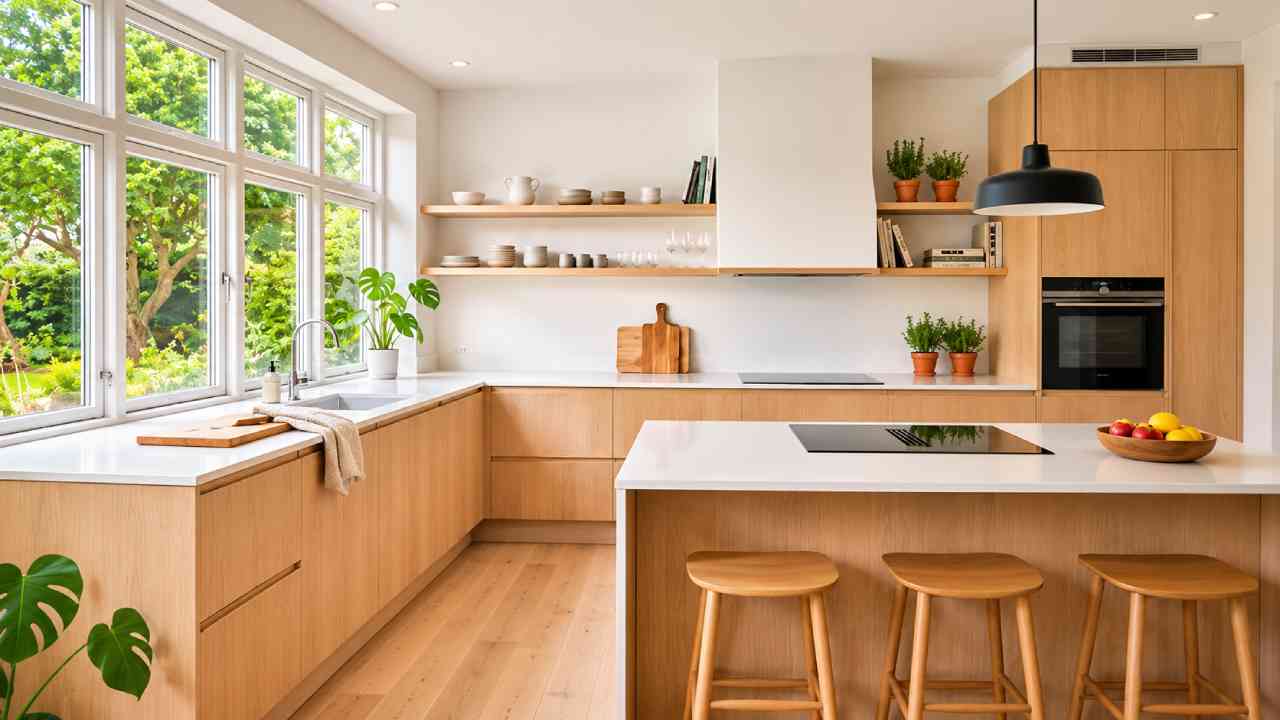
Mayumiotero – Scandinavian Kitchen Design combines simplicity, natural materials, and practical features to create a welcoming cooking environment. This popular Kitchen Design approach emphasizes clean lines, soft neutral colors, and thoughtful storage. Moreover, natural wood and balanced lighting help transform an ordinary kitchen into a comfortable living space. With the right combination of materials and furniture, homeowners can achieve a minimalist kitchen that feels elegant, functional, and inviting.
Scandinavian Kitchen Design Brings Timeless Simplicity Into Modern Homes
Scandinavian Kitchen Design reflects the Nordic appreciation for simplicity, comfort, and everyday functionality. Inspired by homes in Denmark, Sweden, and Norway, this style creates inviting spaces without excessive decoration. Unlike heavily ornamented interiors, Scandinavian kitchens focus on clean surfaces and practical furniture. Moreover, every design element serves a clear purpose. Light-colored cabinets, natural wood, and simple accessories create a harmonious atmosphere. Meanwhile, thoughtful layouts make cooking and cleaning easier. This approach also encourages homeowners to prioritize quality over unnecessary decoration. As a result, the kitchen feels organized without appearing cold or empty. The most successful Scandinavian interiors balance visual simplicity with everyday comfort. Therefore, homeowners can enjoy a beautiful kitchen that remains practical long after changing design trends.
Neutral Colors Create a Bright and Relaxing Kitchen Atmosphere
Color selection plays an important role in Scandinavian Kitchen Design. White remains a popular foundation because it reflects light and creates a clean appearance. However, warm beige, soft gray, and cream also work beautifully. These shades help establish a calm environment without making the kitchen feel monotonous. For example, white cabinets can complement natural oak countertops and beige walls. Meanwhile, subtle black accents introduce contrast through cabinet handles or lighting fixtures. Additionally, muted sage green can provide a refreshing alternative to traditional neutral palettes. The key is maintaining consistency across the space. Too many contrasting colors may disrupt the minimalist atmosphere. Therefore, homeowners should select a limited palette that supports visual harmony. With thoughtful color combinations, even compact kitchens can appear brighter and more welcoming.
Read Also: 7 Beginner Gaming PC Mistakes That Slow Performance
Natural Wood Materials Add Warmth to Minimalist Kitchen Interiors
Natural wood gives Scandinavian Kitchen Design its recognizable warmth and organic character. Without these materials, an entirely white kitchen may appear overly sterile. Fortunately, wood introduces texture while maintaining a minimalist appearance. Light oak, ash, and birch are especially suitable for Nordic-inspired interiors. For instance, oak countertops can complement matte white cabinets beautifully. Similarly, wooden shelves provide practical storage and decorative appeal. However, material selection should consider moisture exposure and daily maintenance. Solid wood surfaces often require protective finishes and regular care. Alternatively, high-quality wood-look laminates can offer a more affordable solution. These materials also provide consistent finishes across cabinets and furniture. Ultimately, the goal is to create a natural appearance without sacrificing practicality. By combining wood with neutral surfaces, homeowners can achieve a balanced and comfortable kitchen.
Smart Kitchen Design Makes Small Spaces Feel More Functional
A well-planned Kitchen Design can make a significant difference in smaller homes. Scandinavian interiors often emphasize efficient layouts rather than unnecessary furniture. Therefore, every cabinet and countertop should support daily activities. For narrow kitchens, a single-wall layout can maintain a clear walking area. Meanwhile, L-shaped arrangements provide additional preparation space when room dimensions allow. Tall cabinets also help maximize vertical storage. Furthermore, built-in appliances can create a more consistent visual appearance. Open shelves may offer convenient access to frequently used items. However, excessive shelving can make compact spaces appear cluttered. A balanced combination of closed cabinets and limited open storage works particularly well. With careful planning, even a modest kitchen can support comfortable cooking routines. Consequently, Scandinavian principles offer practical solutions for apartments and compact family homes.
Natural Lighting Enhances the Beauty of Scandinavian Kitchens
Lighting remains a defining feature of Scandinavian Kitchen Design. Nordic interiors traditionally emphasize natural daylight, especially during darker seasons. As a result, large windows and light-colored surfaces often appear in Scandinavian-inspired homes. Natural light highlights wood textures and creates an inviting atmosphere. However, not every kitchen has access to generous daylight. Fortunately, layered artificial lighting can provide a practical alternative. Under-cabinet LED strips improve visibility during food preparation. Meanwhile, pendant lights add visual interest above kitchen islands or dining counters. Warm white lighting can also create a comfortable evening atmosphere. Nevertheless, task lighting should remain bright enough for safe cooking. Combining ambient and focused lighting produces better results than relying on one ceiling fixture. Therefore, thoughtful lighting improves both appearance and everyday usability.
Minimalist Cabinets Keep Scandinavian Kitchen Design Organized
Cabinet design strongly influences the overall appearance of a Scandinavian kitchen. Flat-panel doors and simple handles create a clean, modern look. Additionally, handleless cabinets can reduce visual distractions. However, attractive cabinetry should also provide convenient storage. Deep drawers work well for pots, pans, and larger kitchen utensils. Meanwhile, adjustable shelves accommodate items of different sizes. Internal organizers can keep cutlery and smaller accessories neatly arranged. Another useful option involves installing pull-out storage in narrow spaces. These features improve accessibility without adding unnecessary decoration. Furthermore, closed cabinets help conceal everyday clutter. This allows countertops to remain visually calm and easy to clean. For homeowners seeking long-term practicality, durable hinges and easy-clean finishes deserve attention. A successful Kitchen Design should look appealing while supporting repeated daily use.
Scandinavian and Japandi Styles Create a Balanced Modern Interior
Scandinavian Kitchen Design shares several characteristics with the increasingly familiar Japandi aesthetic. Both approaches emphasize natural materials, simplicity, and functional furniture. However, Japandi often introduces deeper earth tones and Japanese-inspired detailing. Scandinavian interiors generally favor brighter surfaces and a softer Nordic atmosphere. Combining these styles can produce a warm, contemporary kitchen. For example, light oak cabinets may complement beige stone countertops and matte black fixtures. Meanwhile, handmade ceramic accessories introduce subtle texture. Simple wooden stools can also strengthen the natural appearance. Nevertheless, decorative elements should remain limited. Too many contrasting finishes may weaken the peaceful atmosphere. Instead, homeowners can focus on a few carefully selected materials. This approach creates visual consistency while allowing individual preferences to shape the space. Consequently, Scandinavian and Japandi influences can work together without losing their distinctive character.
Sustainable Kitchen Design Encourages Thoughtful Material Choices
Sustainability can complement the practical philosophy behind Scandinavian Kitchen Design. Rather than replacing furniture frequently, homeowners can prioritize durable materials and timeless finishes. This approach may reduce unnecessary renovation waste over time. For example, well-built cabinets can remain useful through several interior updates. Additionally, energy-efficient appliances may lower electricity consumption during everyday cooking. LED lighting also provides an efficient alternative to traditional incandescent bulbs. When selecting wood products, homeowners can look for credible sourcing certifications. However, sustainability depends on more than appearance or marketing claims. Product durability, repairability, and manufacturing practices also matter. Furthermore, choosing locally available materials may simplify maintenance and replacement. A thoughtful Kitchen Design considers these practical factors from the beginning. As a result, the space can remain attractive while supporting more responsible purchasing decisions.
Simple Decorations Give Scandinavian Kitchens a Cozy Personality
Minimalism does not require removing every decorative element from the kitchen. Instead, Scandinavian Kitchen Design uses a few carefully chosen accessories to create warmth. For instance, ceramic vases can add subtle texture to open shelves. Small herb plants also introduce natural greenery. Meanwhile, wooden cutting boards provide both practical value and decorative appeal. Linen kitchen towels can soften the appearance of stone and metal surfaces. Additionally, simple pendant lights may become attractive focal points. However, decoration should never interfere with food preparation or storage. Crowded countertops often make cleaning more difficult. Therefore, homeowners should reserve enough open space for everyday cooking activities. A small collection of meaningful objects usually creates a stronger impression than excessive accessories. With this approach, the kitchen feels personal while maintaining its minimalist identity.
Choosing Durable Countertops and Backsplashes for Everyday Cooking
Countertops and backsplashes influence both appearance and maintenance in Scandinavian Kitchen Design. Light-colored surfaces often complement the Nordic aesthetic beautifully. However, practical performance should guide material selection. Quartz countertops offer a relatively low-maintenance option for busy kitchens. Meanwhile, properly sealed natural stone provides distinctive patterns and textures. Laminate countertops may also suit homeowners working with smaller renovation budgets. For backsplashes, simple ceramic tiles remain a versatile choice. Their smooth surfaces make routine cleaning more convenient. Additionally, subtle grout colors can maintain a consistent appearance. Homeowners should also consider heat resistance, stain resistance, and installation requirements. No material performs equally well under every condition. Therefore, comparing maintenance needs before purchasing can prevent future frustration. A carefully selected surface helps preserve the kitchen’s appearance while supporting daily cooking.
Functional Kitchen Layouts Improve Comfort and Family Interaction
Scandinavian Kitchen Design values spaces that support everyday family life. Therefore, kitchen planning should consider how people move, cook, and interact. The refrigerator, sink, and cooking area need convenient connections. However, an efficient layout does not require following one rigid arrangement. Instead, homeowners should evaluate their available space and cooking habits. For example, an open-plan kitchen may connect naturally with the dining area. This arrangement encourages conversation while meals are prepared. Meanwhile, a compact breakfast counter can provide additional seating. Adequate walking clearance remains important, especially in shared spaces. Furthermore, easy access to frequently used utensils reduces unnecessary movement. Families with children may also benefit from rounded furniture edges and secure storage. Ultimately, a comfortable Kitchen Design combines visual appeal with thoughtful everyday functionality.
Budget-Friendly Scandinavian Kitchen Design Without Sacrificing Style
Creating a Scandinavian kitchen does not always require an expensive renovation. In many cases, small improvements can produce noticeable visual changes. For example, repainting existing cabinets in warm white can refresh an outdated interior. Replacing cabinet handles may also introduce a cleaner appearance. Meanwhile, affordable wooden accessories can add natural texture. Open shelves offer another option when additional storage is needed. However, homeowners should avoid replacing functional materials solely for aesthetic reasons. Instead, prioritize improvements that solve practical problems. Better lighting, improved drawer organization, and durable work surfaces often provide lasting benefits. Additionally, comparing material samples before purchasing helps prevent mismatched finishes. A realistic renovation budget should also include installation and maintenance costs. With careful decisions, homeowners can achieve a welcoming Scandinavian Kitchen Design while keeping expenses under control.