Mayumiotero – Pressed Flower Art gives flowers a second life after their fresh beauty begins to fade. Instead of letting meaningful blooms disappear, this creative practice preserves their shapes and colors in a new form. The idea is simple, yet the result can feel deeply personal. A flower from a celebration, garden, or memorable journey can become part of a framed botanical composition. Moreover, every bloom develops its own character during the pressing process. Some colors become softer, while delicate details often become more noticeable. That natural transformation makes each piece unique. In my view, this is where the charm truly begins. Pressed flowers are not perfect copies of fresh ones. Instead, they become visual reminders of a particular moment. As a result, the finished artwork combines nature, creativity, and memory without requiring an elaborate concept.
Read Also: Google’s New AI Study Tools Turn Gemini Into an Exam Prep Partner
Why Pressed Flowers Feel So Personal
Flowers often appear during meaningful moments. People give them for celebrations, milestones, and simple gestures of affection. However, fresh flowers naturally have a limited lifespan. Pressed Flower Art offers another way to appreciate them after that moment passes. A single pressed bloom can recall where it came from and why it mattered. Therefore, the emotional value of the artwork may be greater than the cost of its materials. This also separates pressed flower pieces from ordinary decorative prints. A botanical print may look beautiful, but a real preserved flower carries its own physical history. Furthermore, the imperfections make each piece distinctive. A curved stem or slightly faded petal can become part of the story. For many people, those details are more meaningful than flawless symmetry. Consequently, flower pressing works especially well for anyone who enjoys combining creativity with personal memories.
A Traditional Craft That Still Feels Relevant Today
Flower pressing is far from a new idea. Dried and pressed plant specimens have been used for centuries in botanical study and personal collections. Today, however, Pressed Flower Art has found a new audience through creative hobbies and interior styling. The traditional concept remains familiar, but modern presentation has expanded its possibilities. Pressed flowers may appear in floating frames, minimalist wall pieces, handmade stationery, or personal journals. Meanwhile, social media has introduced botanical crafts to people who may never have considered pressing flowers before. Despite that renewed visibility, the basic appeal has changed very little. People remain fascinated by the ability to preserve part of a natural object. This balance between tradition and contemporary creativity makes the craft feel surprisingly current. Rather than replacing older methods, modern styling gives them another context.
Every Flower Changes During the Pressing Process
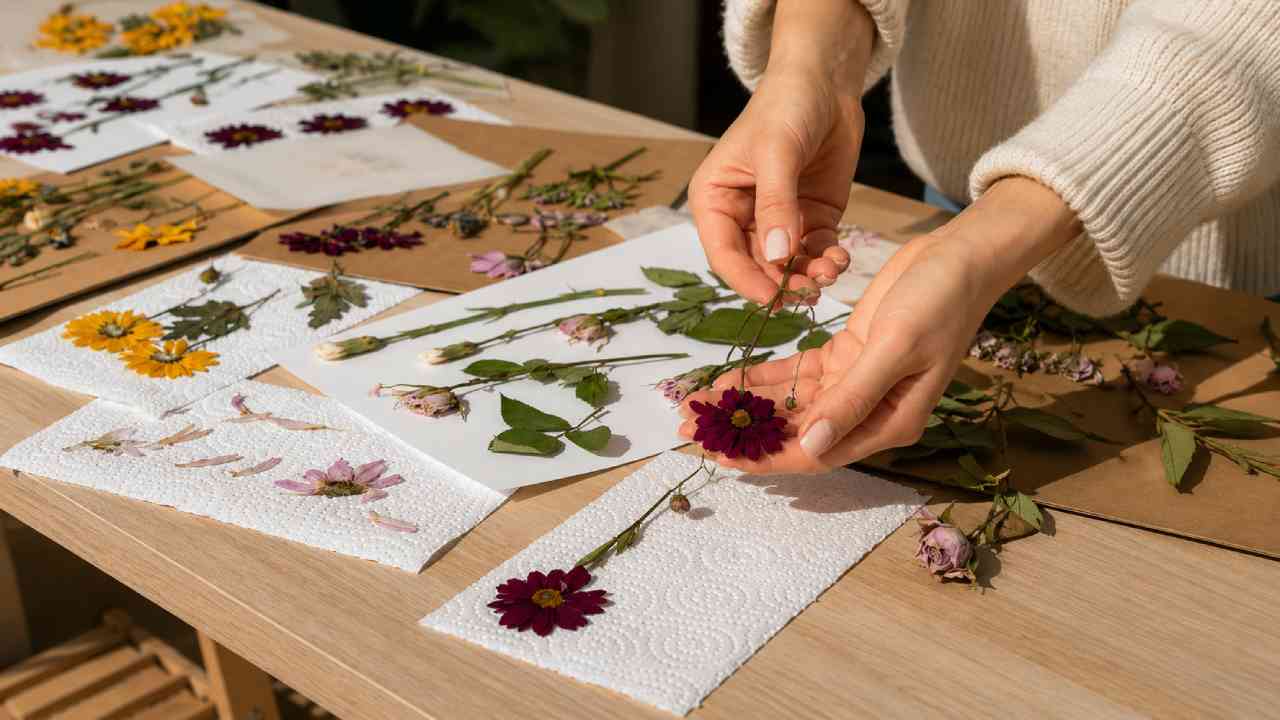
One fascinating part of Pressed Flower Art is that the final appearance cannot always be predicted. Fresh flowers contain moisture, which gradually leaves during drying. As that happens, petals become flatter and their colors may shift. Bright shades can become deeper, softer, or slightly muted. White petals may develop warmer tones over time. Meanwhile, thin leaves can reveal delicate veins that were less noticeable when fresh. These changes are completely natural. Therefore, expecting a pressed flower to look identical to a fresh bloom can create unrealistic expectations. Instead, its transformation should be viewed as part of the artwork. Personally, I think this unpredictability adds character. Digital designs can reproduce the same image repeatedly, while natural flowers behave differently every time. As a result, no two pressed botanical arrangements are completely identical.
Some Flowers Preserve Their Beauty Better Than Others
The choice of flowers can strongly influence the appearance of Pressed Flower Art. Thin and relatively flat blooms usually adapt well to traditional pressing. Pansies, violas, cosmos, small daisies, and forget-me-nots are often suitable because their petals are not excessively thick. Ferns and delicate leaves can also create beautiful supporting details. In contrast, thick flowers contain more moisture and may require greater care. Large roses, for example, can be more challenging when pressed as complete blooms. Individual petals may offer better results. Freshness also matters. Flowers that already show significant damage may darken further during drying. Therefore, choosing healthy blooms generally provides more flexibility. Still, experimentation is part of the creative process. Sometimes an ordinary garden flower develops unexpected character after pressing. That element of discovery keeps the activity interesting even after completing several pieces.
From Simple Blooms to Elegant Botanical Decor
Once preserved, flowers can become surprisingly versatile decorative elements. Pressed Flower Art can range from a single minimalist stem to a detailed arrangement filled with different species. A floating glass frame creates an airy appearance because the flowers seem suspended within the composition. Meanwhile, a solid background can provide stronger contrast for pale petals. The arrangement itself can also change the mood. Symmetrical layouts feel formal and controlled, while loose compositions can resemble a small wildflower meadow. Additionally, leaving empty space around the flowers often makes individual shapes more noticeable. This approach works especially well with delicate botanical pieces. In my opinion, the strongest designs do not always use the largest number of flowers. A carefully placed stem can sometimes create more visual impact than a crowded arrangement. Ultimately, the natural form of each bloom should remain the main attraction.
Pressed Flower Art Has Become Part of Creative Lifestyle Culture
The renewed interest in Pressed Flower Art fits naturally with a broader appreciation for handmade activities. Many creative hobbies now focus on enjoying the process rather than producing something quickly. Flower pressing follows that idea because it requires observation and patience. The flowers need time to dry before they can become part of a finished piece. Afterwards, arranging delicate petals encourages slower and more careful movement. In contrast to fast digital activities, this process feels intentionally physical. You work with real textures, irregular shapes, and natural materials. Moreover, the activity can begin with flowers found in everyday surroundings. A garden or bouquet may provide enough inspiration for a new project. This accessibility makes pressed botanical art appealing to beginners as well as experienced crafters. Creativity becomes connected to ordinary life instead of requiring a specialized studio.
Read Also: Foveated Rendering Brings Sharper Graphics Where Your Eyes Look
Botanical Art Can Carry Memories Beyond Photographs
Photographs are one of the easiest ways to preserve important moments. However, Pressed Flower Art offers something different because the preserved material was physically present during that experience. A flower from a memorable trip can become a reminder of the place itself. Likewise, blooms connected with celebrations can carry emotional meaning long after the event. This physical connection gives botanical keepsakes a distinctive quality. Of course, natural materials continue to change with age. Their colors may soften over time, especially when exposed to strong light or unsuitable conditions. Yet that gradual transformation can become part of their appeal. Rather than remaining perfectly unchanged, the artwork develops its own history. For me, this makes pressed flowers especially suited to memory keeping. They do not simply represent a moment. They are small pieces of that moment preserved in another form.
The Appeal of Imperfection Makes Every Piece Unique
Modern visual culture often celebrates perfect symmetry and flawless surfaces. Pressed Flower Art moves in another direction. Natural petals may fold slightly, stems can curve, and colors rarely remain completely uniform. Nevertheless, these irregularities often make the composition more interesting. A tiny tear or faded edge can reveal that the material is real rather than manufactured. Moreover, every flower reacts differently during preservation. Even two blooms from the same plant may produce different results. This makes duplication almost impossible. Consequently, each arrangement carries its own visual identity. From a creative perspective, that uniqueness is valuable. Instead of trying to force nature into perfect shapes, the artist can work with what the flower provides. The result feels more organic and personal. In many cases, accepting imperfection produces a stronger piece than trying to hide every natural variation.
Pressed Flower Art Gives Nature a New Story
Pressed Flower Art shows how something temporary can take on a different kind of permanence. Flowers will always change after they are picked, but pressing allows part of their form to remain visible much longer. More importantly, the process gives those flowers a new purpose. A bloom that once decorated a table may later become part of a framed memory. A small wildflower can represent an unforgettable journey. Meanwhile, an ordinary garden flower may simply become a beautiful piece of botanical decor. This versatility explains why the craft continues to attract creative people. It combines natural beauty with personal interpretation without needing excessive complexity. In my view, its strongest quality is the story behind each piece. The finished artwork does more than preserve petals. It keeps a small connection to the place, person, or moment that made those flowers worth remembering.