Mayumiotero – Industrial Design quietly influences many objects we touch every day. A coffee maker, office chair, smartphone, reusable bottle, and desk lamp may appear simple at first. However, each successful product reflects dozens of decisions about shape, comfort, materials, function, and production. Good designers consider how people hold, move, clean, store, and understand an object. As a result, thoughtful design can turn an ordinary product into something easier and more enjoyable to use. This process also connects creativity with practical problem-solving. Designers must balance visual appeal with cost, durability, safety, and manufacturing limits. In my view, the strongest products rarely depend on decoration alone. Instead, their value becomes clear through daily use. When buttons feel natural, handles sit comfortably, and functions require little explanation, design is already doing its job.
Read Also: Meta Business Agent Arrives in Indonesia, Bringing 24/7 AI Customer Service to Businesses
Industrial Design Begins With Everyday Human Needs
Strong Industrial Design usually starts with observation rather than appearance. Designers study how people interact with existing products and identify small frustrations. For example, a bottle may be difficult to grip when wet. An office chair may feel uncomfortable after several hours. Meanwhile, a kitchen appliance may have controls that confuse first-time users. These details create opportunities for improvement. Therefore, designers often research user behavior before developing a final form. Interviews, observation, prototypes, and testing can reveal problems that sketches alone cannot show. This human-centered approach also helps teams avoid creating features that look impressive but offer little practical value. In practice, even a minor change can make a noticeable difference. A better handle angle or clearer button layout may improve the entire experience. Ultimately, understanding people gives designers a stronger foundation for creating products that solve real problems.
Function and Beauty Need to Work Together
A beautiful object can attract attention, yet appearance alone does not guarantee good design. Products must perform their intended purpose consistently. Consequently, industrial designers balance aesthetics with usability from the beginning. Consider a modern electric kettle. Its silhouette may look elegant on a countertop, but users also need a comfortable handle, stable base, readable controls, and safe pouring experience. If one of those elements fails, visual beauty quickly becomes less important. On the other hand, purely functional products can feel awkward or uninviting. Successful Industrial Design connects both sides. Form communicates purpose, while thoughtful details improve interaction. Color, proportion, texture, and material can also help users understand where to hold or operate an object. For this reason, aesthetics should support function rather than compete with it. The best results often feel simple because complex decisions have already been resolved behind the scenes.
Ergonomics Can Change the Entire Product Experience
Comfort becomes especially important when a product is used repeatedly. Ergonomics examines how objects interact with the human body. Therefore, designers consider hand size, posture, reach, movement, weight, and physical effort. A computer mouse offers a familiar example. Small differences in curvature, button placement, and surface texture can affect comfort during extended use. The same principle applies to kitchen tools, furniture, power tools, and personal devices. However, there is rarely one shape that suits every person perfectly. Designers must work with measurements, testing, and different user groups to find practical solutions. Prototypes are particularly useful during this stage because physical interaction reveals issues that digital models may hide. From my perspective, ergonomics is one of the clearest examples of design creating invisible value. Users may never notice every carefully calculated detail. Still, they immediately notice when a product feels uncomfortable.
Materials Influence More Than Appearance
Material selection can completely change how a product looks, feels, performs, and ages. Metal may communicate strength and precision, while wood can introduce warmth and natural texture. Plastics offer flexibility in shape and production. Meanwhile, glass can provide visual clarity but requires careful consideration of durability and weight. Industrial Design teams must evaluate these characteristics before choosing materials. Cost, manufacturing methods, maintenance, expected lifespan, and environmental impact also matter. For example, a lightweight material might improve portability but reduce the feeling of stability. Similarly, a premium surface finish may look impressive yet scratch easily during normal use. Therefore, material decisions involve trade-offs rather than simple aesthetic preferences. Designers often collaborate with engineers and manufacturers to understand what is technically realistic. When materials match the product’s purpose, users experience a stronger sense of quality without needing to understand the engineering behind it.
Prototyping Turns Ideas Into Testable Products
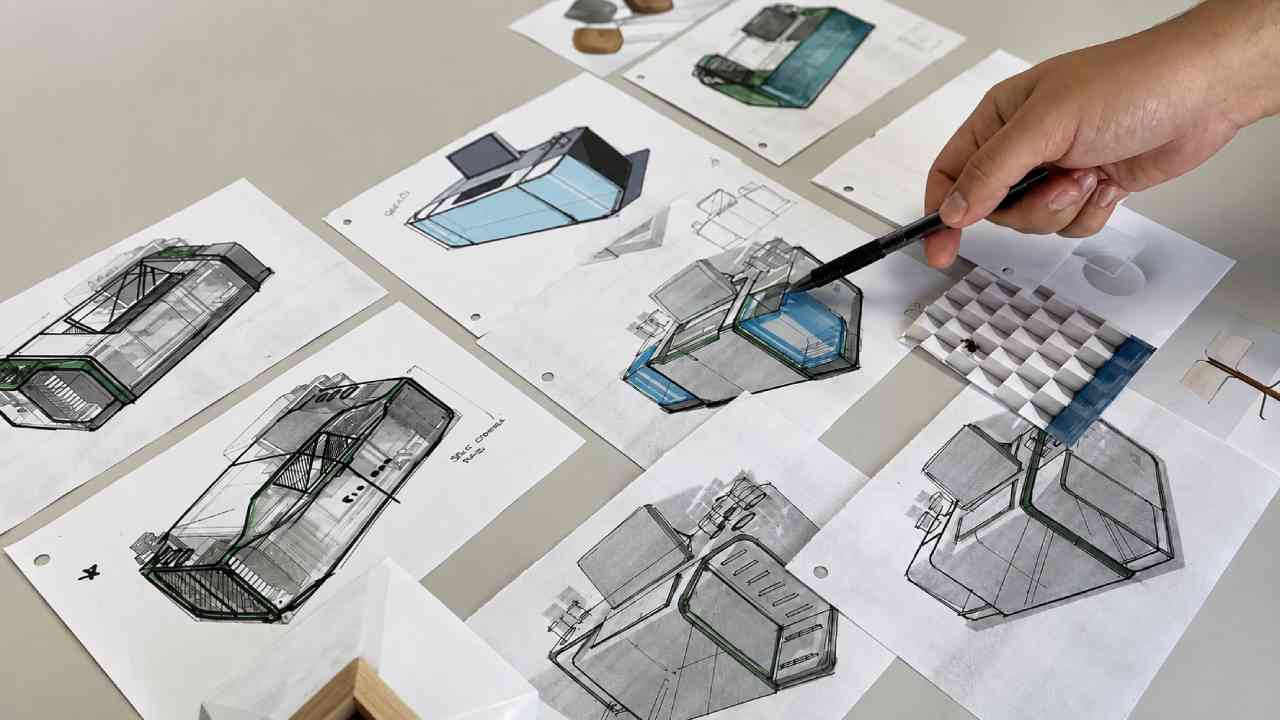
A sketch can communicate an idea, but a prototype reveals whether that idea actually works. Prototyping is a critical part of Industrial Design because it allows teams to test form, scale, movement, and usability before full production. Early prototypes may be made from cardboard, foam, clay, or simple 3D-printed parts. At this stage, perfection is unnecessary. Instead, designers need fast ways to identify problems. Later prototypes can become more detailed and closely resemble the intended product. For instance, testing a new desk lamp may reveal that its base is too light or its adjustment mechanism feels awkward. Finding those issues early can prevent expensive changes later. Moreover, prototypes encourage useful feedback from real users and other specialists. Each test creates another opportunity to refine the design. In this sense, prototyping turns failure into information. A flawed prototype can be valuable when it exposes a problem before manufacturing begins.
Manufacturing Shapes the Final Design
Designers cannot ignore how products will be manufactured. An impressive concept may become impractical if it requires overly complex assembly or expensive processes. Therefore, Industrial Design often develops alongside engineering and manufacturing planning. Designers need to understand processes such as injection molding, machining, casting, forming, and additive manufacturing. These methods influence wall thickness, curves, joints, surface details, and many other features. Moreover, production volume can change which approach makes financial sense. A limited-edition object may support a process that would be too costly for millions of units. Collaboration becomes essential at this stage. Engineers may suggest structural improvements, while manufacturers can identify opportunities to simplify assembly. Designers then refine the product without losing its original purpose. This balance between creative ambition and production reality separates attractive concepts from products that can successfully reach everyday users.
Sustainability Is Becoming Part of Better Product Design
Environmental considerations increasingly influence decisions about products and materials. Sustainable Industrial Design can examine how much material a product requires, how long it lasts, and what happens after its useful life. Durability is particularly important. A product that remains functional for many years may reduce the need for frequent replacement. In addition, designers can explore recycled materials, replaceable components, efficient packaging, and easier repair. However, sustainability should be evaluated carefully rather than treated as a marketing label. A material that sounds environmentally friendly may still involve complicated production or transportation trade-offs. Therefore, designers need to consider the broader product life cycle. Modular construction can also help because damaged components may be replaced without discarding an entire device. In my view, this approach makes sustainability more practical. Instead of adding a green feature at the end, environmental thinking becomes part of the initial design decisions.
Read Also: Gallery Wall Inspiration: Creative Ideas to Transform Your Space with Personal Style
Digital Tools Have Changed the Design Process
Modern designers have access to tools that previous generations could only imagine. Computer-aided design software allows teams to develop precise three-dimensional models before physical production begins. Digital rendering can also explore materials, lighting, colors, and finishes quickly. Furthermore, 3D printing makes certain prototypes faster to produce and easier to revise. These technologies have accelerated many stages of Industrial Design, but they have not eliminated the need for human judgment. A realistic rendering cannot confirm whether a handle feels comfortable. Likewise, an attractive digital model may still create manufacturing challenges. Designers must combine digital precision with physical testing and observation. New computational tools can support concept exploration as well. Nevertheless, technology works best as an extension of the design process rather than a replacement for it. Understanding people, materials, manufacturing, and context remains essential regardless of which software enters the workflow.
Small Design Decisions Can Create Large Improvements
Some of the most effective design improvements are surprisingly small. Consider the difference between a confusing remote control and one with clearly grouped buttons. Both devices may offer identical functions, yet one feels easier immediately. Similar improvements appear in packaging that opens cleanly, handles that provide a secure grip, or storage containers that stack efficiently. These examples show why Industrial Design matters beyond expensive technology or luxury products. Small decisions can save time and reduce frustration during repeated interactions. Moreover, good design often becomes almost invisible because users do not need to think about it. They simply understand what to do. That effortless experience usually results from careful research, iteration, and testing. Therefore, judging design only by appearance misses much of its value. The way an object communicates and responds during use can matter just as much as its visual identity.
Industrial Design Continues to Shape Everyday Life
Everyday objects continue to evolve as lifestyles, technologies, and expectations change. Products now need to fit smaller homes, hybrid workplaces, connected environments, and increasingly diverse users. Consequently, Industrial Design must respond to more than visual trends. Designers need to consider accessibility, repairability, digital interaction, manufacturing efficiency, and long-term usefulness. At the same time, the fundamental goal remains surprisingly consistent: make products work better for people. A well-designed chair supports the body without demanding attention. A useful appliance communicates its controls clearly. A thoughtfully shaped bottle feels natural in the hand. These experiences may seem ordinary, yet they demonstrate how design influences daily routines. The most successful products often combine many disciplines without making that complexity visible. Ultimately, industrial design transforms everyday objects by making careful decisions where human needs, technology, materials, and practical production meet.