Mayumiotero – Smart Cars and Visual Technology is changing the way we understand driving, safety, and even the future of transportation itself. Not long ago, a car’s “intelligence” was limited to simple features like parking sensors or cruise control. However, modern vehicles are beginning to “see” the road in ways that feel almost human. Cameras, radar, LiDAR, and AI systems now work together to detect lanes, recognize pedestrians, read traffic signs, and predict potential hazards. This shift is not just a luxury upgrade. It is a major step toward safer roads and smarter mobility, even for everyday drivers.
“Read Also: Upcycling Plastic Bottles into Functional Plant Pots“
Why Cars Need Vision Systems to Become Truly Smart
Smart Cars and Visual Technology relies on one key idea: a vehicle cannot make safe decisions unless it understands its environment. Human drivers constantly scan the road, judge distance, and react to movement. Smart cars must replicate this awareness using sensors and software. That is why “vehicle vision” is at the center of modern innovation. Without it, autonomous or semi-autonomous driving is impossible. Moreover, even basic driver assistance features depend on visual input. Lane-keeping, collision avoidance, and adaptive cruise control all require accurate detection of what is happening ahead, beside, and behind the vehicle.
The Core Tools: Cameras, Radar, and LiDAR Working Together
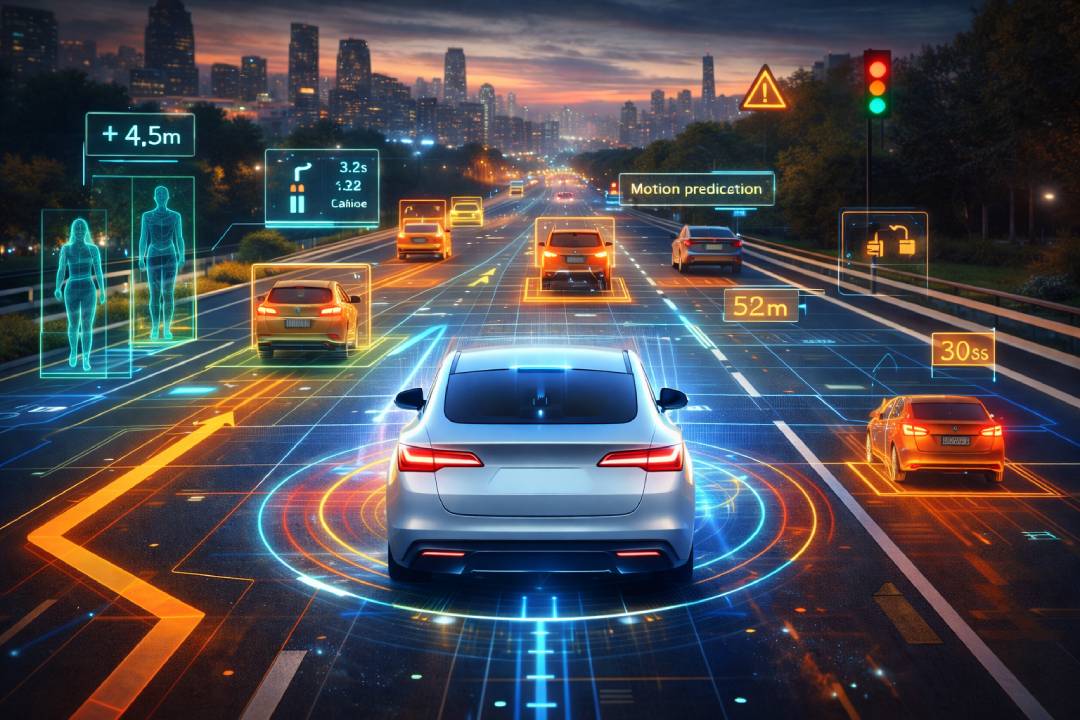
Smart Cars and Visual Technology is powered by multiple sensor types, not just one. Cameras provide rich visual detail, which helps identify objects like cars, bicycles, and road markings. Radar, on the other hand, excels at measuring distance and speed, especially in fog or heavy rain. LiDAR adds another layer by creating 3D maps of surroundings using laser pulses. While LiDAR is more expensive, it can deliver highly precise depth information. In practice, many smart cars combine these tools. This combination is often called sensor fusion. It matters because each sensor has weaknesses, yet together they create a more reliable “vision.”
How AI Helps Cars Interpret What They See
Smart Cars and Visual Technology becomes powerful when AI enters the equation. Sensors alone only collect data. AI is what turns that data into meaning. For example, a camera may detect a shape, but AI determines whether it is a pedestrian, a cyclist, or a plastic bag blowing across the road. AI models are trained on massive datasets containing millions of road scenarios. Over time, they learn patterns and improve accuracy. Still, AI does not “think” like a human. It calculates probabilities. That is why building trust in these systems takes time, testing, and constant refinement.
Lane Detection and Sign Recognition: Small Features With Big Impact
Smart Cars and Visual Technology often becomes visible to drivers through features like lane detection and traffic sign recognition. These tools may seem simple, yet they are foundational. Lane detection uses cameras to track road markings and keep the vehicle centered. Sign recognition uses computer vision to read speed limits and warnings. Together, they reduce driver workload and improve awareness. In my opinion, these features represent the most realistic form of smart driving today. They do not replace the driver completely, but they provide an extra set of eyes. That support can make a real difference during long trips or moments of fatigue.
Pedestrian and Cyclist Detection: The Real Safety Breakthrough
Smart Cars and Visual Technology reaches its most meaningful value when it protects human lives. Pedestrian detection and cyclist detection are among the most important safety advancements in modern vehicles. These systems use cameras and radar to detect movement near the car, especially in urban areas. When a potential collision is detected, the car can warn the driver or even brake automatically. This is especially important because human reaction time is limited. Even a one-second delay can cause tragedy. While these systems are not perfect, they represent a major step forward compared to traditional driving where the driver is the only line of defense.
“Read Also: Top 10 Richest People in the World Right Now, 7 of Them are Tech Moguls“
The Challenge of Weather, Lighting, and Unexpected Road Situations
Smart Cars and Visual Technology still faces serious challenges, particularly in real-world conditions. Rain, snow, fog, and glare can confuse cameras. Similarly, unusual lighting at dawn or dusk can reduce accuracy. Even road construction zones can cause problems because lane markings may be unclear or inconsistent. Furthermore, unexpected objects such as fallen debris or animals require fast interpretation. This is why many experts say full autonomy is harder than people assume. The road is unpredictable. Humans adapt instinctively, while machines require training and validation. Therefore, the future of smart cars depends not only on better sensors, but also on smarter decision-making systems.
Why Driver Assistance Is Growing Faster Than Full Self-Driving
Smart Cars and Visual Technology is advancing quickly, yet most vehicles today are still in the driver assistance stage. This is not a failure. It is a realistic progression. Features like adaptive cruise control, automatic braking, and blind spot monitoring are already saving lives. Full self-driving, however, demands near-perfect reliability in countless scenarios. In my view, driver assistance is the smarter path for now because it delivers real benefits without unrealistic promises. It also gives society time to adapt. Drivers learn how to share control with technology, while engineers continue improving safety step by step.
The Future of Vehicle Vision: Smarter Roads and Smarter Mobility
Smart Cars and Visual Technology will likely evolve beyond the car itself. In the future, vehicles may communicate with traffic lights, road sensors, and smart infrastructure. This could reduce accidents, improve traffic flow, and make cities more efficient. Additionally, AI systems will become more personalized, adapting to driving styles and predicting risk more accurately. However, trust will remain the key issue. People want safety, yet they also want control. That balance will shape the next decade of automotive innovation. Still, one thing is clear: cars that can “see” are no longer science fiction. They are already here, and they are quietly changing the road.