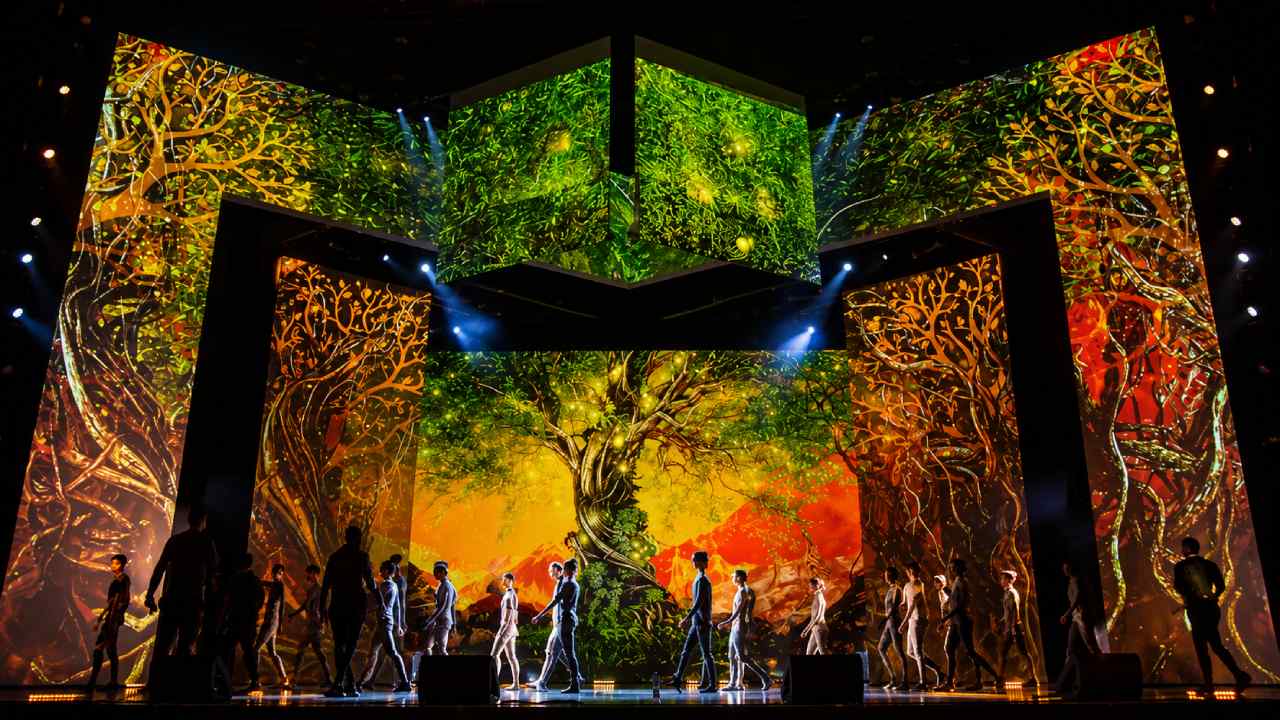
Mayumiotero – Projection Mapping has transformed the way people experience digital visuals by turning ordinary objects into dynamic digital canvases. Rather than projecting images onto a flat screen, this technology precisely maps animations, graphics, and videos onto three-dimensional surfaces. As a result, buildings, vehicles, sculptures, and stage sets appear to come alive with movement and storytelling. Over the past decade, projection mapping has become increasingly popular because it combines creativity with technical precision. Moreover, audiences now expect immersive experiences instead of traditional visual presentations. Consequently, artists, designers, and technology companies continue to adopt projection mapping to create memorable installations that blur the boundaries between physical objects and digital content.
Read Also: Google Finance Returns with AI-Powered Stock Analysis and Smarter Investment Research Tools
Understanding What Projection Mapping Really Is
At its core, Projection Mapping is a visual technology that aligns digital imagery with the exact dimensions of a real-world object. Unlike conventional projection systems that require a flat surface, analyzes an object’s shape, depth, and texture before displaying customized content. Therefore, the projected visuals appear naturally integrated with the object itself. This technique creates convincing optical illusions that can make solid structures seem to transform, collapse, expand, or move. Because every projection is carefully calibrated, the final presentation feels remarkably realistic. As technology continues to improve, projection has become more accessible for both large productions and smaller creative projects.
How Projection Mapping Works Behind the Scenes
Although the final presentation looks effortless, relies on several carefully coordinated steps. First, the object or surface is measured using digital modeling, laser scanning, or photogrammetry to capture its dimensions accurately. Next, designers create animations specifically tailored to the object’s geometry. Afterward, high-brightness projectors are positioned and calibrated so every pixel aligns perfectly with the physical surface. Finally, specialized software synchronizes the visual content with lighting, sound, and timing. Consequently, the audience experiences a seamless illusion where digital graphics appear to become part of the object rather than merely projected onto it.
The Technology That Makes Projection Mapping Possible
Modern Projection Mapping combines several advanced technologies into one integrated workflow. High-lumen projectors provide sufficient brightness for large-scale installations, while media servers process and synchronize multiple video streams simultaneously. In addition, specialized mapping software enables creators to adjust perspective, correct distortion, and fine-tune every visual element with exceptional precision. Powerful graphics processors also play an essential role by rendering complex animations in real time. Meanwhile, cameras and motion sensors can introduce interactive features that respond to audience movement. Together, these technologies allow to deliver increasingly sophisticated visual experiences across a wide variety of environments.
Why Projection Mapping Creates Such Powerful Visual Illusions
One reason Projection Mapping captures so much attention is its ability to manipulate human perception. The brain naturally interprets changes in light, shadow, and perspective as physical movement. Therefore, when projections are accurately aligned, stationary objects appear to bend, rotate, crack, or transform into entirely different structures. Furthermore, carefully designed animations reinforce these illusions by matching architectural details and object contours. Instead of simply watching a video, audiences feel as though the environment itself has changed. This emotional impact explains why is frequently chosen for major public events, artistic exhibitions, and large-scale celebrations.
Applications Across Multiple Industries
The versatility of Projection Mapping extends far beyond entertainment. In architecture, it visualizes building concepts before construction begins, helping designers communicate ideas more effectively. Museums use the technology to enrich exhibitions with historical reconstructions and animated storytelling. Meanwhile, educational institutions employ projection mapping to explain scientific concepts through immersive visual demonstrations. Retail brands also integrate into product launches and storefront displays to create memorable customer experiences. Furthermore, live concerts, theater productions, and festivals increasingly rely on to enhance performances without requiring permanent stage modifications. This broad range of applications demonstrates the technology’s remarkable flexibility.
Advantages That Continue to Drive Innovation
Projection mapping offers several advantages compared with traditional display methods. Most importantly, it transforms existing objects without permanently altering them. As a result, historical buildings, museum artifacts, and architectural landmarks can become interactive visual experiences while preserving their original condition. Additionally, digital content can be updated quickly to support different themes, events, or campaigns. This flexibility significantly reduces production costs over time. Furthermore, projection mapping supports storytelling in ways that static displays cannot achieve. By combining motion, color, sound, and spatial awareness, creators deliver immersive narratives that leave lasting impressions on audiences.
Read Also: Modern School Design Creates a Comfortable Learning Environment for All Students
Challenges and Technical Considerations
Despite its impressive capabilities, Projection Mapping presents several technical challenges. Ambient lighting can reduce projection visibility, particularly during daytime outdoor events. Therefore, many installations are scheduled after sunset or inside controlled environments. Additionally, projector placement requires careful planning to avoid shadows and image distortion. Large-scale productions may also require multiple synchronized projectors, increasing both equipment costs and setup complexity. Content creation represents another significant investment because animations must be customized for each unique surface. Nevertheless, advances in projection hardware and mapping software continue to simplify these processes while improving overall performance.
The Future of Projection Mapping
The future of Projection Mapping looks increasingly promising as emerging technologies continue to expand its capabilities. Artificial intelligence is helping automate object recognition and projection calibration, reducing preparation time while improving accuracy. At the same time, real-time rendering engines enable more responsive and interactive visual experiences. Motion tracking, computer vision, and sensor technologies are also making installations more engaging by allowing projections to react instantly to audience movements. Looking ahead, projection mapping is expected to play an even greater role in smart cities, immersive tourism, digital museums, education, live entertainment, and interactive public spaces.
Final Thoughts on Projection Mapping
Projection Mapping has evolved into one of today’s most innovative forms of visual communication. By combining precise engineering, artistic creativity, and advanced digital technology, it transforms ordinary objects into captivating visual experiences that inspire curiosity and engagement. Moreover, its adaptability allows organizations across numerous industries to communicate ideas in memorable and impactful ways. As software, projection systems, and artificial intelligence continue advancing, projection mapping will likely become even more accessible and sophisticated. Ultimately, this technology demonstrates how digital innovation can reshape the way people experience architecture, storytelling, education, entertainment, and public spaces without physically altering the world around them.