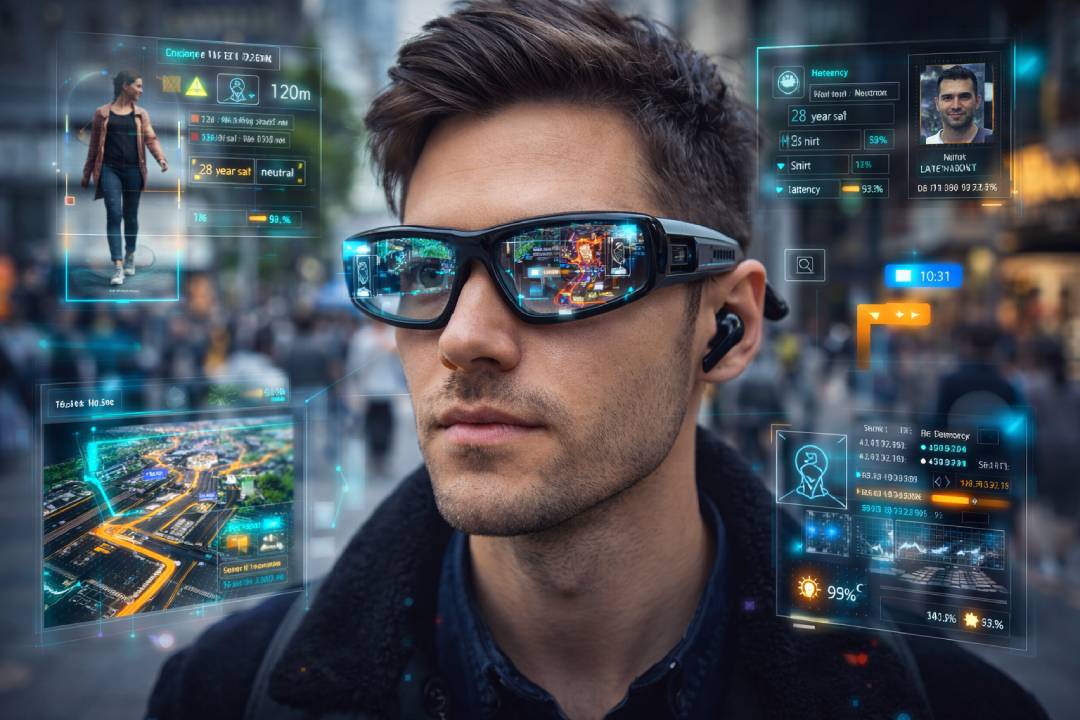
Mayumiotero – How Visual Intelligence Is Transforming AI Wearables is no longer a futuristic question. Instead, it is a present-day shift that is redefining how we interact with technology. In recent years, wearable devices have evolved from simple fitness trackers to advanced AI-powered tools. However, the real breakthrough lies in visual intelligence. This technology allows devices to interpret and respond to visual data in real time. Consequently, wearables are becoming more intuitive and context-aware. In my view, this shift marks the beginning of a new computing era. Rather than relying only on touch or voice, users now interact through sight and environment.
“Read Also: Apple Set to Unveil at Least Five New Products Next Week“
What Visual Intelligence Really Means
At its core, visual intelligence refers to a system’s ability to understand images and surroundings. Unlike traditional cameras that only capture photos, AI-enabled wearables analyze objects, text, and spatial information instantly. For example, smart glasses can identify landmarks or translate foreign signs in real time. Therefore, the device does more than record data. It interprets meaning. This capability is powered by computer vision and on-device AI processing. As a result, wearables move closer to human-like perception. In practical terms, this means technology can assist users without constant manual input.
The Rise of AI Smart Glasses
Smart glasses are currently leading the wearable transformation. Over the past year, major technology companies have invested heavily in AR-integrated eyewear. These devices overlay digital information onto the physical world. Consequently, navigation directions, notifications, and object recognition appear directly within a user’s field of vision. Compared to smartphones, smart glasses reduce the need to look down at a screen. Instead, information blends seamlessly into daily life. In my opinion, this subtle integration is what makes visual intelligence powerful. It feels natural rather than intrusive.
Why Visual Context Matters More Than Ever
Modern consumers expect devices to anticipate needs. Visual intelligence enables context awareness. For instance, a wearable can recognize a product in a store and provide instant reviews. Similarly, it can detect hazards while cycling and alert the user. Because of this, the technology shifts from reactive to proactive assistance. Moreover, context-based computing improves efficiency. Instead of typing queries, users simply look at objects. The system responds accordingly. This efficiency is one reason analysts predict strong growth in the AI wearable market over the next decade.
Comparing Visual Intelligence to Voice AI
Voice assistants transformed technology a decade ago. However, they rely heavily on spoken commands. Visual intelligence adds a new layer. It does not require users to speak or touch devices. Instead, it processes environmental cues automatically. For example, voice AI might answer a question about a restaurant. In contrast, visual AI can identify the restaurant as you walk past it. Therefore, the interaction feels immediate. While both technologies complement each other, visual intelligence introduces a richer form of engagement.
“Read Also: Balcony Urban Farming Smart Gardening Ideas for Small“
Real-World Applications Beyond Convenience
Beyond lifestyle use, visual intelligence has serious professional value. In healthcare, wearable AI can assist surgeons with real-time data overlays. In manufacturing, workers can receive step-by-step visual instructions without pausing tasks. Additionally, accessibility features for visually impaired users are improving significantly. Devices can describe surroundings and read text aloud. Consequently, visual intelligence enhances inclusion. From my perspective, this humanitarian aspect is often overlooked. Yet it may be one of the most meaningful outcomes of the technology.
Privacy and Ethical Considerations
Despite its promise, visual intelligence raises privacy concerns. Wearables that continuously scan environments must handle sensitive data responsibly. For instance, facial recognition and location tracking require strict regulation. Therefore, companies must balance innovation with ethical standards. Transparent data policies and secure processing are essential. Without them, public trust may decline. In my opinion, the success of AI wearables depends as much on governance as on innovation. Responsible development will determine long-term adoption.
The Future of Visual Computing
How Visual Intelligence Is Transforming AI Wearables ultimately points toward ambient computing. This concept describes technology that integrates seamlessly into everyday life. Instead of interacting with separate devices, users engage with intelligent environments. Over time, visual AI may reduce reliance on smartphones. However, full replacement is unlikely in the short term. Rather, devices will coexist and complement each other. As advancements continue, the boundary between digital and physical worlds will blur further. Consequently, wearables will not just support tasks. They will redefine how we perceive and navigate reality itself.