Mayumiotero – Spatial Light Modulators are changing how engineers control light in modern optical systems. Instead of simply producing an image, these devices can modify light across thousands or millions of individual points. They can control properties such as intensity, phase, or polarization, depending on their design. As a result, light becomes something engineers can shape through digital instructions. This ability supports applications in holography, laser systems, microscopy, projection, and advanced imaging. More importantly, the technology connects software with physical optics in a remarkably direct way. A computer creates a pattern, while the modulator translates that pattern into changes in a light field. Therefore, Spatial Light Modulators offer much more than another type of display. They provide a practical bridge between digital information and programmable light.
Read Also: NVIDIA Invests in MediaTek as AI Chip Competition Intensifies
Spatial Light Modulators Give Engineers Direct Control Over Light
A traditional light source mainly provides illumination. However, many advanced optical systems need far more control. They may need to change the brightness of one area while adjusting the phase of another. Spatial Light Modulators make this possible across a two-dimensional surface. In simple terms, an SLM contains many controllable elements that interact with incoming light. Each element can respond to electronic instructions. Therefore, engineers can create detailed optical patterns without replacing physical components every time. This flexibility is especially useful in laboratories, where researchers often need to test many configurations. Instead of manufacturing a new optical mask for each experiment, they can load another digital pattern. Consequently, one device can perform many different tasks. This programmable nature is one reason SLM technology has become important in modern optics.
Light Can Be Modified Without Changing the Original Source
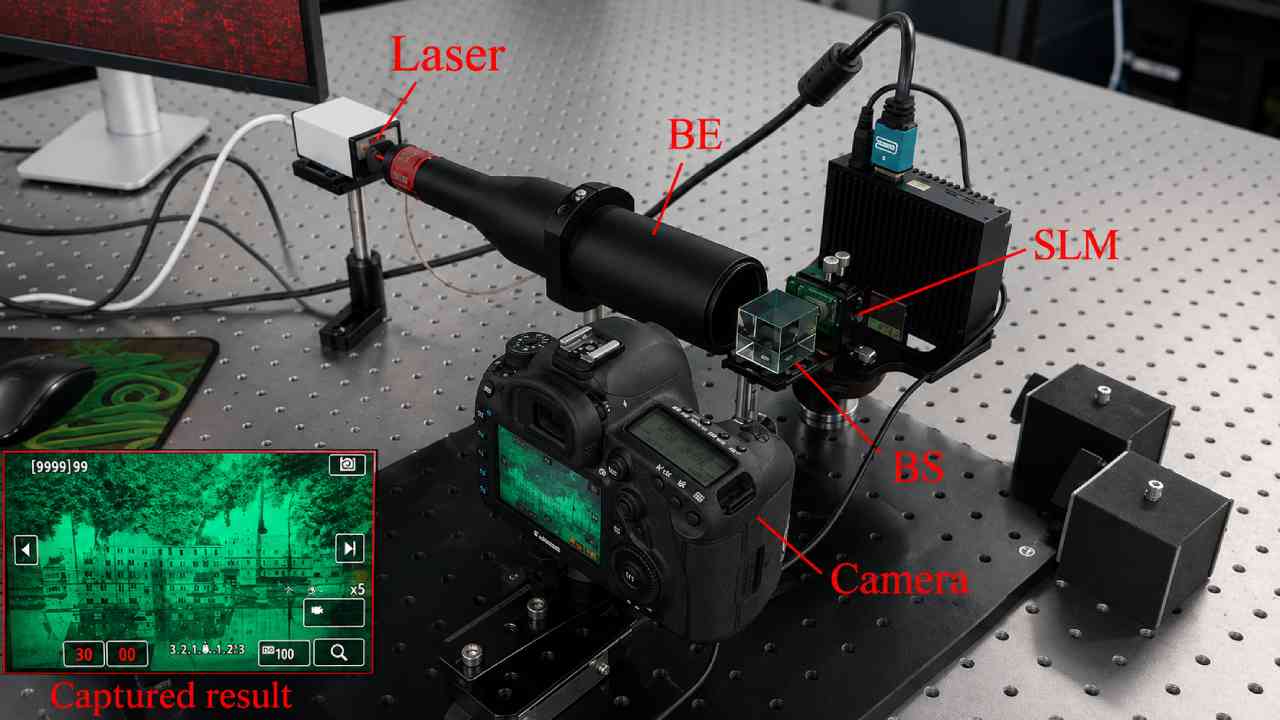
One fascinating feature of Spatial Light Modulators is their ability to transform an existing beam. The light source itself does not need to change each time a new pattern is required. For example, a laser can produce a stable beam before it reaches an SLM. The modulator then changes selected properties across that beam. Depending on the system, it may alter intensity or introduce controlled phase differences. Optical components can then transform those changes into a desired distribution of light. This approach gives researchers considerable flexibility. Moreover, digital patterns can often be replaced much faster than physical optical elements. The principle may sound abstract at first. Yet it is similar to applying a programmable filter to light itself. Instead of editing an image after a camera captures it, the system controls the light before it reaches another stage.
Liquid Crystal Technology Can Control the Phase of a Beam
Liquid crystal technology plays an important role in many Spatial Light Modulators. One common architecture is Liquid Crystal on Silicon, often shortened to LCoS. In these systems, a liquid crystal layer works with an electronically controlled silicon backplane. Applying different voltages changes the orientation of the liquid crystal molecules. Consequently, light interacting with each pixel can experience a controlled optical change. Phase modulation is especially valuable because phase influences how light waves interfere with each other. Engineers can use this effect to shape a beam or create complex wavefronts. Furthermore, a computer can calculate the required phase pattern and send it directly to the device. This process creates a close connection between computation and optics. Rather than relying only on fixed lenses, researchers gain a reconfigurable optical element. That flexibility makes liquid-crystal SLMs useful across many scientific and visual applications.
Tiny Mirrors Offer Another Way to Manipulate Optical Patterns
Not every Spatial Light Modulator relies on liquid crystals. Digital Micromirror Devices use a different mechanical approach. A DMD contains an array of extremely small mirrors that can change orientation. Each mirror directs incoming light toward or away from a chosen optical path. Together, these mirrors can create detailed patterns at high speed. This principle is well known in digital projection, but its usefulness extends much further. Researchers can use DMD systems for structured illumination, microscopy, spectroscopy, and computational imaging. Compared with many liquid-crystal systems, micromirror technology has different strengths and limitations. For instance, a DMD primarily controls where light travels rather than directly providing the same phase-control mechanism as a phase-focused LCoS device. Therefore, engineers select the technology according to the application. The important point is that both approaches turn a static optical surface into something electronically controllable.
Digital Holography Shows the Technology at Its Most Visual
Holography provides one of the most visually compelling uses for Spatial Light Modulators. A computer can calculate a holographic pattern based on the image or light field it needs to reproduce. The system then sends that pattern to an SLM. When coherent light interacts with the programmed surface, its wavefront changes. Additional optical components can use that modified wavefront to reconstruct the intended light distribution. Unlike a permanently recorded hologram, a programmable system can update its pattern electronically. Therefore, researchers can experiment with dynamic holographic content rather than relying on a single fixed image. However, creating convincing holographic displays remains technically demanding. Resolution, diffraction efficiency, viewing angle, pixel size, and computational requirements all matter. Even so, the role of the SLM is significant. It provides a controllable surface where mathematical instructions can become physical changes in light.
Beam Shaping Turns a Simple Laser Into a More Flexible Tool
A laser beam may appear simple, but many scientific applications require a specific shape or intensity distribution. Spatial Light Modulators can help create those patterns through a process known as beam shaping. First, software calculates the optical pattern needed for the desired result. Next, the SLM applies the corresponding modulation to the incoming beam. After passing through the rest of the optical system, the beam can take on a new spatial structure. This capability is useful because researchers do not always want a conventional circular laser spot. Some experiments require multiple points, rings, lines, or more complex patterns. In addition, the pattern can be changed through software. That makes experimental setups more adaptable. In my view, this application reveals the real value of programmable optics. The technology does not simply improve how light looks. Instead, it changes what scientists can make light do.
Optical Tweezers Show How Programmable Light Can Move Tiny Objects
The connection between light and physical movement becomes especially interesting in optical trapping. Optical tweezers use highly focused laser light to trap and manipulate microscopic particles. Researchers have used this principle in areas ranging from physics to biological research. Spatial Light Modulators can add another level of control by creating multiple optical traps or changing their positions. For example, a calculated holographic pattern can produce several focused points from a single optical system. Researchers can then update the pattern to reposition those traps. As a result, light becomes a highly precise manipulation tool rather than only a way to illuminate an object. Of course, the complete system requires careful optical design and calibration. Still, the concept demonstrates how programmable light can interact with the physical world. Few examples illustrate the potential of Spatial Light Modulators as clearly as this one.
Read Also: Art Deco Design Blends Vintage Glamour With Modern Elegance
Modern Microscopy Benefits From More Precise Illumination
Microscopy depends heavily on the relationship between light, a sample, and an imaging sensor. Therefore, better control over illumination can provide researchers with new ways to observe small structures. Spatial Light Modulators can generate structured illumination patterns or manipulate a wavefront before light reaches the sample. They can also support specialized computational imaging techniques. In some optical systems, programmable phase control can help compensate for wavefront distortions. As a result, researchers gain more flexibility than a completely fixed optical arrangement would provide. Importantly, an SLM does not automatically make every microscope better. Its usefulness depends on the imaging method, optical design, calibration, and scientific goal. Nevertheless, programmable illumination is becoming an important concept in advanced imaging. It allows software and optical hardware to work together, which can create capabilities that neither could provide as effectively on its own.
Programmable Optics Could Influence Future Visual Systems
The future of Spatial Light Modulators extends beyond laboratories. Advanced displays, augmented reality, holographic imaging, and optical computing may all benefit from better programmable light control. However, several engineering challenges remain. Pixel pitch affects the optical patterns a device can create. Refresh rate determines how quickly those patterns can change. Meanwhile, efficiency matters because optical energy lost inside the system can reduce brightness. Wavelength compatibility is another consideration. A device designed for one spectral range may not perform equally well across every type of light. Cost and manufacturing complexity also influence commercial adoption. Therefore, future progress will require improvements in materials, semiconductor fabrication, algorithms, and optical engineering. If those areas continue advancing together, SLMs could become smaller and more capable. Their greatest potential may come from making complex optical systems increasingly software-defined.
Spatial Light Modulators Make Light Behave More Like Digital Information
For centuries, people controlled light mainly through physical objects such as mirrors, lenses, apertures, and filters. Those components remain essential today. However, Spatial Light Modulators add something fundamentally different: reconfigurability. A digital pattern can change how an optical system behaves without rebuilding the entire setup. That shift makes light feel more like programmable information. One moment, an SLM can display one modulation pattern. Shortly afterward, software can replace it with another. This ability supports experimentation, automation, and dynamic visual systems. It also explains why the technology appears across such different fields. Holography may focus on reconstructed wavefronts, while microscopy focuses on imaging. Laser research may require beam shaping instead. Yet all these applications share the same underlying idea. By controlling light spatially and electronically, Spatial Light Modulators turn an optical surface into a programmable tool.