Mayumiotero – Adaptive Typography has emerged as one of the most fascinating shifts in the way designers build immersive spaces, whether in virtual reality, augmented environments, or next-generation web interfaces. At its core, adaptive typography focuses on creating text that responds dynamically to user behavior, environmental conditions, and spatial contexts. This shift is not only aesthetic but also deeply functional because immersive platforms require text that remains readable despite motion, depth, and interaction complexity. As digital worlds expand rapidly, adaptive typography becomes an essential foundation for accessibility, emotional connection, and seamless communication.
“Read also: How AI Agents Are Quietly Reshaping Enterprise Workflows“
How Immersive Environments Challenge Traditional Typography Rules
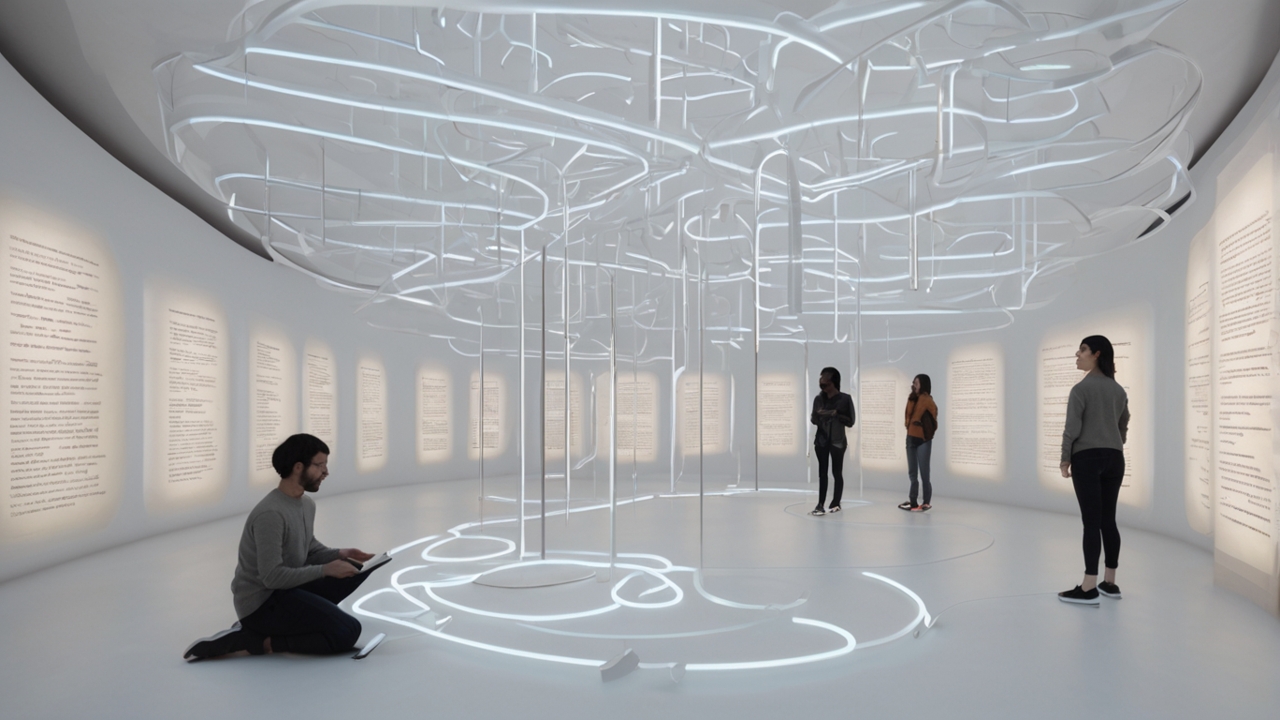
Adaptive Typography becomes especially relevant when we explore how immersive spaces break long-standing principles of print and screen design. In VR or AR environments, text must exist within a three-dimensional field that constantly shifts based on user perspective. Consequently, designers must consider depth, parallax, resolution distortion, and physical movement elements traditional typography never accounted for. These constraints push designers to rethink type size, weight, contrast, and spacing. Although these challenges seem daunting, they encourage innovations that make reading more intuitive across varied sensory conditions.
The Role of User Behavior in Shaping Typography Responsiveness
Adaptive Typography also evolves through user-centric design, as immersive systems now monitor gaze patterns, head movement, and interaction speed. When a user walks closer to an object, for instance, the text may shrink to maintain natural proportions. Conversely, if a user looks away quickly, the typography may increase contrast or brightness to recapture attention. These subtle shifts significantly enhance comprehension and comfort. As a result, designers can craft experiences that feel alive, intelligently modulating text to match human rhythm and intent.
Environmental Influences That Demand Real-Time Typography Adjustments
Immersive environments introduce variables like lighting fluctuation, background complexity, and spatial acoustics, which directly impact readability. Adaptive Typography compensates by altering text color, shadow depth, or outline strength based on environmental sensors. For example, when a virtual scene becomes darker, typography may automatically switch to high-contrast modes. Although these adjustments might appear minor, they profoundly improve usability, ensuring that readers never strain to interpret information within evolving environments.
“Read also: Inside the Minds of AI Leaders: How a Small Group Is Rewriting the Rules of Business“
Blending Emotion and Communication Through Adaptive Design Principles
Adaptive Typography is not only functional; it is deeply expressive. Designers often use subtle animation, fluid transitions, or responsive emphasis styles to amplify emotional storytelling within immersive narratives. When a storyline becomes tense, typography may tighten letter spacing or shift tone through motion dynamics. When the environment relaxes, the typography softens accordingly. This emotional synchronization creates a powerful bond between user and content, allowing typography to participate actively in narrative delivery rather than merely presenting information.
Technological Frameworks Powering Typography Intelligence
Behind the scenes, Adaptive Typography relies on advanced frameworks such as machine learning, spatial computing, and real-time rendering engines. These technologies analyze user data and environmental cues to determine the most effective typographic adjustments. Developers often integrate predictive algorithms that anticipate reader needs before cognitive strain occurs. As immersive spaces grow richer and more complex, these frameworks evolve to maintain performance efficiency without compromising typographic clarity. Because of this synergy, text becomes an intelligent system rather than a static visual element.
Design Challenges and Ethical Considerations in Immersive Contexts
Despite its promise, Adaptive Typography introduces several design dilemmas and ethical questions. Designers must balance adaptability with stability; excessive movement can overwhelm users or lead to motion discomfort. Additionally, over-personalized text responses may raise privacy concerns when systems track gaze behavior or emotional cues. Therefore, transparency and clear user consent become essential components of responsible design. By addressing these issues, creators can ensure immersive typography remains empowering rather than intrusive.
The Future of Reading: How Adaptive Typography Shapes Tomorrow’s Digital Worlds
Looking forward, Adaptive Typography will likely become a default design requirement for immersive technologies. As spatial computing integrates more deeply into daily life from virtual workplaces to mixed-reality storytelling typography must evolve into a fluid, intelligent medium. Designers envision text that anticipates cognitive load, adjusts to emotional states, and harmonizes with spatial narratives. This future places readers at the center of the experience, granting them effortless access to information in ways that feel natural, intuitive, and deeply human.