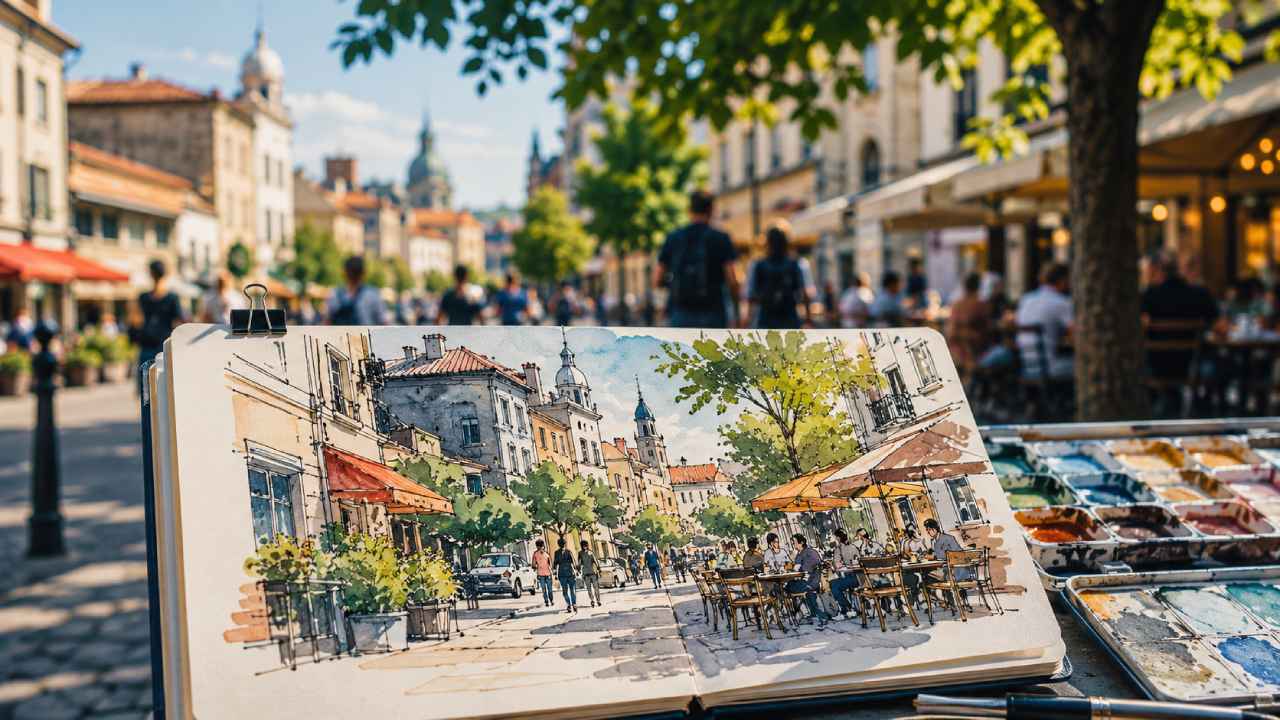
Mayumiotero – Urban Sketching transforms daily city scenes into meaningful visual stories. Instead of drawing from photographs, artists work directly at the location. They observe buildings, people, traffic, cafés, and small details around them. As a result, each drawing captures a moment that may never appear the same again. A crowded market, for example, can become a lively page filled with movement and color. Meanwhile, a quiet alley may reveal interesting textures and shadows. This practice encourages artists to slow down and look more carefully. Moreover, it shows that creativity does not always require a studio. A simple bench, sketchbook, and pen can be enough. In my view, that simplicity makes urban sketching especially appealing. It allows people to connect with a place while creating something personal. Therefore, every sketch becomes more than an image. It becomes a visual memory shaped by time, atmosphere, and individual experience.
Read Also: Google’s Android Becomes More Closed, Raising Concerns Among Custom ROM Developers
Drawing on Location Creates a Stronger Sense of Place
Drawing directly on location gives artists a deeper connection with their surroundings. They can hear conversations, feel the weather, and notice changes in light. These details often influence the final artwork. For instance, a windy afternoon may lead to faster and looser lines. In contrast, a calm morning may encourage more careful observation. Therefore, the environment becomes part of the creative process. Urban Sketching also helps artists understand the character of a neighborhood. Modern towers may stand beside traditional shops. Busy roads may connect with peaceful public gardens. Through drawing, these contrasts become easier to recognize. Furthermore, sketches can reveal how people use public spaces. A plaza may look empty in a photograph, yet feel lively when observed for thirty minutes. In this way, on-location drawing offers more context than a quick snapshot. It records not only what a place looks like, but also how it feels at a specific moment.
Simple Tools Make Urban Sketching Easy to Begin
One reason Urban Sketching attracts many beginners is its simple equipment. Artists do not need expensive materials or a large workspace. A small sketchbook, pencil, pen, and compact watercolor set are usually enough. Some people even begin with only a ballpoint pen. Therefore, the cost of entry can remain low. Portability also makes the hobby convenient. The tools fit easily inside a backpack or small shoulder bag. As a result, artists can draw during lunch breaks, weekend walks, or travel. However, choosing comfortable materials still matters. A sketchbook with sturdy paper works better for watercolor. Waterproof ink also prevents lines from bleeding. In addition, a folding stool can help during longer sessions. Beginners should avoid buying too many supplies at once. Instead, they can test a few basic tools and learn what feels natural. This approach reduces pressure and keeps the focus on observation, practice, and enjoyment rather than equipment.
Observation Matters More Than Perfect Drawing Skills
Many beginners worry that their sketches will not look realistic. However, Urban Sketching does not demand perfection. The main goal is to observe and record a personal response to a place. Therefore, expressive lines can be more valuable than flawless perspective. A slightly uneven building may still communicate charm and atmosphere. Likewise, quick figures can suggest movement without detailed faces. This freedom makes the practice more welcoming. Artists can develop their own visual language over time. Some prefer clean architectural lines. Others enjoy loose ink marks and bright watercolor washes. Moreover, mistakes often add character to the page. A misplaced line can become a shadow, sign, or decorative element. From experience, progress usually appears through regular practice rather than constant correction. Beginners should focus on large shapes first. After that, they can add windows, people, signs, and textures. This method keeps the drawing process clear, manageable, and enjoyable.
Urban Sketching Supports Mindfulness and Creative Focus
Urban Sketching can also support mindfulness because it requires steady attention. While drawing, artists focus on shapes, colors, sounds, and movement. Consequently, everyday worries often become less dominant. The mind shifts toward the present scene. This process resembles a creative form of meditation. However, it remains active rather than silent. The hand continues moving while the eyes keep observing. Many people find this rhythm calming after a busy day. In addition, sketching encourages patience. A detailed façade cannot be understood in a few seconds. Artists must look again, compare proportions, and simplify what they see. Therefore, the practice trains both concentration and visual awareness. It may also provide a healthier break from constant screen use. Instead of scrolling through images, people create their own visual record. Although urban sketching is not a replacement for professional mental health care, it can become a relaxing habit. Most importantly, it gives people a reason to pause and notice their surroundings.
City Life Offers Endless Subjects for Creative Exploration
Cities provide an almost unlimited range of subjects. Historic buildings, food stalls, public transport, parks, and street performers can all inspire a sketch. Therefore, artists rarely need to search far for ideas. Even familiar places can look different at another time of day. Morning light creates soft shadows, while evening light adds warmth and contrast. Seasonal changes also affect the scene. Rain may create reflections on the road. Meanwhile, summer crowds can make public spaces feel energetic. Urban Sketching encourages artists to explore these changing conditions. It also helps them discover overlooked corners of their own city. A small bookstore or old doorway may become more interesting after careful observation. In addition, different neighborhoods offer distinct visual identities. Business districts often feature sharp lines and glass surfaces. Traditional areas may contain textured walls and handmade signs. By sketching both, artists build a richer understanding of urban life and design.
Travel Sketches Preserve Memories in a More Personal Way
Travel photography records places quickly, yet sketches often hold stronger personal memories. The reason is simple. Drawing requires time, attention, and emotional involvement. While sketching a station or café, travelers remember the sounds, weather, and people nearby. Therefore, the finished page becomes connected to a complete experience. Urban Sketching also changes the pace of travel. Instead of rushing between attractions, artists may spend thirty minutes observing one location. This slower approach can reveal details that tourists often miss. Moreover, sketches do not need to look polished. A rough line can still bring back a vivid memory years later. Travelers can also add dates, notes, ticket stubs, or short observations. As a result, the sketchbook becomes a personal travel journal. In my opinion, this format feels more intimate than a digital gallery. Each page reflects not only the destination, but also the artist’s mood, choices, and perspective at that moment.
Read Also: How AI Image Generation Transforms Modern Visual Content Creation
Community Events Help Artists Learn and Stay Motivated
Urban Sketching often becomes more enjoyable when practiced with others. Many cities have informal sketch walks, creative meetups, or local drawing groups. These events allow beginners to learn without formal pressure. Participants usually choose one location, draw for a set time, and share their work afterward. Therefore, everyone can see how different artists interpret the same scene. This comparison is useful because it highlights many possible styles. One person may focus on architecture, while another may draw people and movement. Furthermore, community support can improve motivation. Artists are more likely to practice regularly when they have scheduled events. Online communities also provide inspiration through shared sketches and location ideas. However, beginners should avoid comparing their progress too harshly. Each artist develops at a different pace. The best approach is to observe techniques, ask questions, and remain curious. Over time, group sketching can build confidence, friendships, and a stronger creative routine.
Consistent Practice Builds Confidence and a Unique Style
A personal style develops through repetition, experimentation, and honest observation. It rarely appears after only a few drawings. Therefore, beginners should focus on consistent practice rather than immediate results. One short sketch each week can create visible progress over several months. Artists can also test different approaches. For example, they may draw only with ink one day. On another day, they may use watercolor, markers, or colored pencils. These small experiments reveal personal preferences. In addition, reviewing older sketchbooks helps artists notice improvement. Lines may become more confident, compositions may feel clearer, and color choices may become stronger. Urban Sketching rewards patience because each session teaches something new. Even an unfinished drawing can improve observation skills. Most importantly, artists should keep their work personal. Trends can provide inspiration, but copying every popular style may limit growth. A unique voice appears when artists draw places they genuinely care about and respond to them honestly.
Urban Sketching Makes Creative Living More Accessible
Urban Sketching proves that creativity can exist inside ordinary routines. People do not need distant destinations or perfect conditions. A bus stop, coffee shop, or nearby park can become a useful subject. Therefore, the practice fits naturally into modern lifestyles. It can be social or private, detailed or quick, colorful or simple. This flexibility allows artists to adapt the hobby to their available time. Moreover, it encourages a more attentive relationship with the city. Streets become collections of stories rather than simple routes. Buildings reveal history, while public spaces show changing human behavior. In this sense, urban sketching combines art, travel, observation, and memory. It also creates a lasting record of places that may change over time. New developments can replace old shops and familiar streets. However, sketches preserve their character. Ultimately, this creative habit helps people see everyday life with greater curiosity, patience, and appreciation.