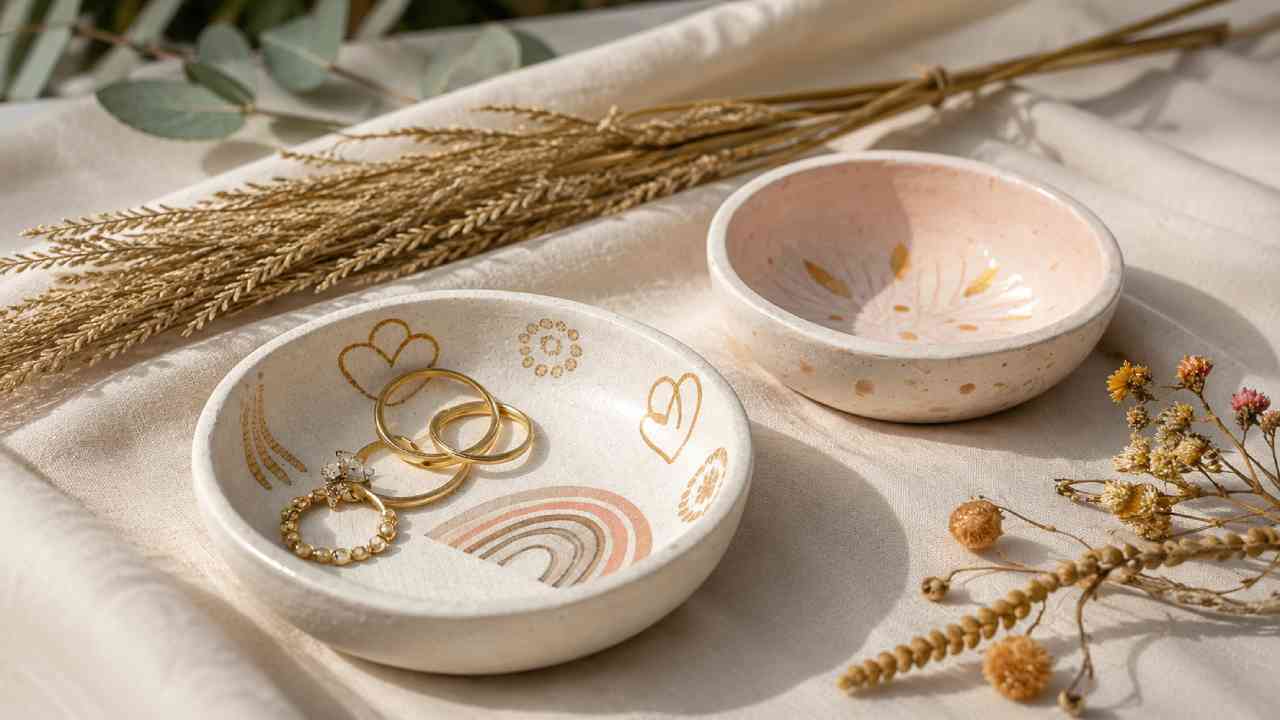
Mayumiotero – Air-Dry Clay can turn an ordinary vanity into a space that feels more personal and creative. Instead of buying another generic jewelry tray, you can shape a small trinket dish by hand. The finished piece can hold rings, earrings, hair clips, or other tiny accessories that often disappear across a busy dressing table. More importantly, this craft does not require a pottery kiln. Most air-dry clay products harden naturally when exposed to air, although drying times vary by brand and thickness. Therefore, the project feels approachable even for beginners. I also think its imperfections are part of the appeal. A slightly uneven edge or visible hand-shaped curve gives the dish character that mass-produced decor often lacks. As a result, a simple craft becomes both practical storage and a small piece of personal artwork.
Read Also: Google Launches Motion Assist to Ease Travel Sickness on Android
Why This Small DIY Project Feels So Satisfying
Creative projects sometimes become overwhelming because they require expensive tools or advanced skills. However, an Air-Dry Clay trinket dish keeps things refreshingly simple. You begin with a small amount of material and gradually transform it into something useful. That process creates an immediate sense of progress. Moreover, there is no single correct design to follow. You can make a round dish, a heart, a flower, or an organic shape with softly curved edges. This flexibility makes the project suitable for different decorating styles. Minimalist interiors may suit neutral shades and clean lines. Meanwhile, colorful rooms can handle cherries, stripes, flowers, or playful patterns. Because the object is small, experimenting also feels less intimidating. If the first attempt is not perfect, the next dish can easily become an opportunity to improve your technique.
Simple Materials Are Enough to Get Started
One reason Air-Dry Clay crafts remain appealing is their relatively short supply list. You do not need to fill an entire room with equipment before starting. Usually, the essential materials include Air-Dry Clay, a rolling pin, a craft knife, fine sandpaper, acrylic paint, small brushes, and a compatible sealer. A small bowl can also work as a shaping guide. Additionally, simple household objects can create interesting textures. For example, a clean leaf may leave delicate botanical impressions. A toothpick can add tiny dots, while a blunt tool can create subtle lines. Nevertheless, always check the clay manufacturer’s instructions before using water, paint, or finishing products. Different formulas behave differently. This small step can prevent avoidable problems later. Good preparation may seem less exciting than decorating, but it often determines whether the finished dish looks polished or rushed.
Shaping the Dish Is Where Creativity Begins
Once the Air-Dry Clay feels workable, roll it into an even sheet on a clean surface. Avoid making it extremely thin because delicate areas may become more fragile after drying. Next, cut your preferred shape using a template, cutter, or craft tool. Then, gently raise the outer edges to create a shallow bowl. At this stage, the dish begins developing its personality. Smooth curves can create a modern appearance, while scalloped edges offer a softer and more playful look. You can also create subtle impressions before the clay starts becoming firm. However, resist the temptation to add every idea at once. In my experience, small handmade objects often look stronger when the design has one clear direction. A simple flower shape with a painted center, for instance, can look more intentional than a surface crowded with unrelated patterns.
Proper Drying Can Make a Noticeable Difference
Drying may be the least exciting stage, yet it deserves patience. Air-Dry Clay hardens as moisture gradually leaves the material. However, the exact drying period depends on the clay formula, thickness, humidity, and surrounding conditions. Therefore, follow the instructions provided with your chosen product. Avoid assuming the center is completely dry simply because the surface feels firm. Painting or sealing too early may affect the final finish. In addition, very thin or uneven areas can sometimes warp as they dry. Starting with consistent thickness helps reduce that risk. Once the piece has fully hardened, inspect the edges and surface. Fine sandpaper can help soften rough areas if the clay manufacturer recommends sanding. Afterward, remove the dust carefully before painting. Although waiting requires patience, this stage often separates a rushed-looking craft from one that feels thoughtfully finished.
Paint Can Transform a Plain Dish Into Something Personal
A plain clay surface provides an excellent canvas for experimenting with color. Neutral tones such as cream, beige, soft pink, and muted green create a calm appearance. In contrast, red, cobalt blue, orange, or yellow can make the dish a small focal point. Air-Dry Clay trinket dishes also work beautifully with simple patterns. Tiny cherries can create a playful retro mood, while delicate flowers bring a softer botanical character. Checkerboard patterns feel bolder, whereas irregular dots can produce a relaxed handmade effect. Furthermore, you do not need professional painting skills. Simple shapes often look especially charming on small objects. Apply paint in thin coats and allow each layer to dry as directed. Then, add smaller details gradually. By working slowly, you maintain cleaner edges and gain more control over the final appearance.
A Protective Finish Helps Preserve the Decoration
After painting, you may want to apply a compatible craft sealer. This finishing layer can help protect painted details from everyday handling. However, not every sealer works with every type of Air-Dry Clay or paint. For that reason, check the instructions for all products involved. A glossy finish can create a ceramic-inspired appearance, while a matte finish keeps the surface understated. Still, sealing decorative clay does not automatically make it equivalent to kiln-fired, glazed ceramic. Water resistance and durability depend heavily on the specific materials used. Therefore, a handmade trinket dish is best treated as decorative storage unless its product specifications state otherwise. It works perfectly for rings, earrings, bracelets, keys, and similar dry objects. Careful finishing can extend its decorative life while keeping the painted design looking fresh.
Your Vanity Becomes More Organized Without Looking Boring
A vanity needs organization, but practical storage does not have to feel clinical. A handmade trinket dish solves a surprisingly common problem: small jewelry pieces scattered between cosmetics, perfume bottles, and brushes. Instead of placing everything inside a large organizer, you can keep frequently used pieces within easy reach. For example, rings worn every day can stay in one dish beside the mirror. Earrings can occupy another near a jewelry box. Because Air-Dry Clay is easy to personalize, the storage itself becomes part of the decor. This combination of function and personality is what makes the project especially useful. Rather than hiding clutter inside another container, you are giving selected objects a deliberate place. Consequently, even a small vanity can feel more considered and visually balanced without undergoing an expensive makeover.
Read Also: LiDAR Imaging, The Visual Technology That Measures the World in 3D
Handmade Trinket Dishes Make Thoughtful Personalized Gifts
Air-Dry Clay trinket dishes are also well suited to handmade gifting. Their small size keeps the project manageable, while the design can be adapted to the recipient. A floral pattern may suit someone who loves botanical decor. Meanwhile, initials, stars, hearts, or abstract lines can create a more personal touch. You could even choose colors that match someone’s bedroom or dressing area. Nevertheless, personalization works best when it remains thoughtful rather than excessive. One meaningful detail can be more effective than covering every centimeter with decoration. Presentation matters as well. Once the dish is fully finished, tissue paper and a simple gift box can make it feel special. Unlike a standard store-bought accessory, a handmade piece carries evidence of the time spent shaping, painting, and finishing it. That personal quality gives even a modest craft emotional value.
Small Imperfections Can Become Part of the Design
One of the biggest creative lessons from working with Air-Dry Clay is learning when to stop chasing perfection. Handmade pieces naturally develop small variations. The rim may curve slightly differently on one side, or a painted flower may not be perfectly symmetrical. Yet those details do not necessarily ruin the finished object. In fact, they can reinforce its handmade identity. Of course, cracks, weak sections, or unfinished rough edges should still be addressed when possible. Craftsmanship matters. However, there is a meaningful difference between poor construction and harmless visual irregularity. Mass-produced home accessories are designed to look identical. Handmade objects offer something different: visible individuality. For creative lifestyle projects, that distinction matters because the process is part of the experience. The goal is to create a functional object with personality, not to reproduce something that looks as though it came directly from a factory.
Air-Dry Clay Makes Everyday Creativity Feel Accessible
The strongest appeal of this project is its simplicity. Air-Dry Clay allows beginners to explore shaping, texture, color, and decorative finishing within one manageable craft. At the same time, the finished trinket dish serves a real purpose. It can organize everyday jewelry while adding a handmade detail to a vanity, dresser, or bedside table. Moreover, the project can evolve as your skills improve. A first dish might feature a simple round shape and solid color. Later, you can experiment with scalloped edges, botanical impressions, painted patterns, or more sculptural forms. That gradual progression makes the craft rewarding rather than intimidating. Ultimately, creative living does not require transforming every corner of a home. Sometimes, making one small object by hand is enough to bring personality into an everyday space.