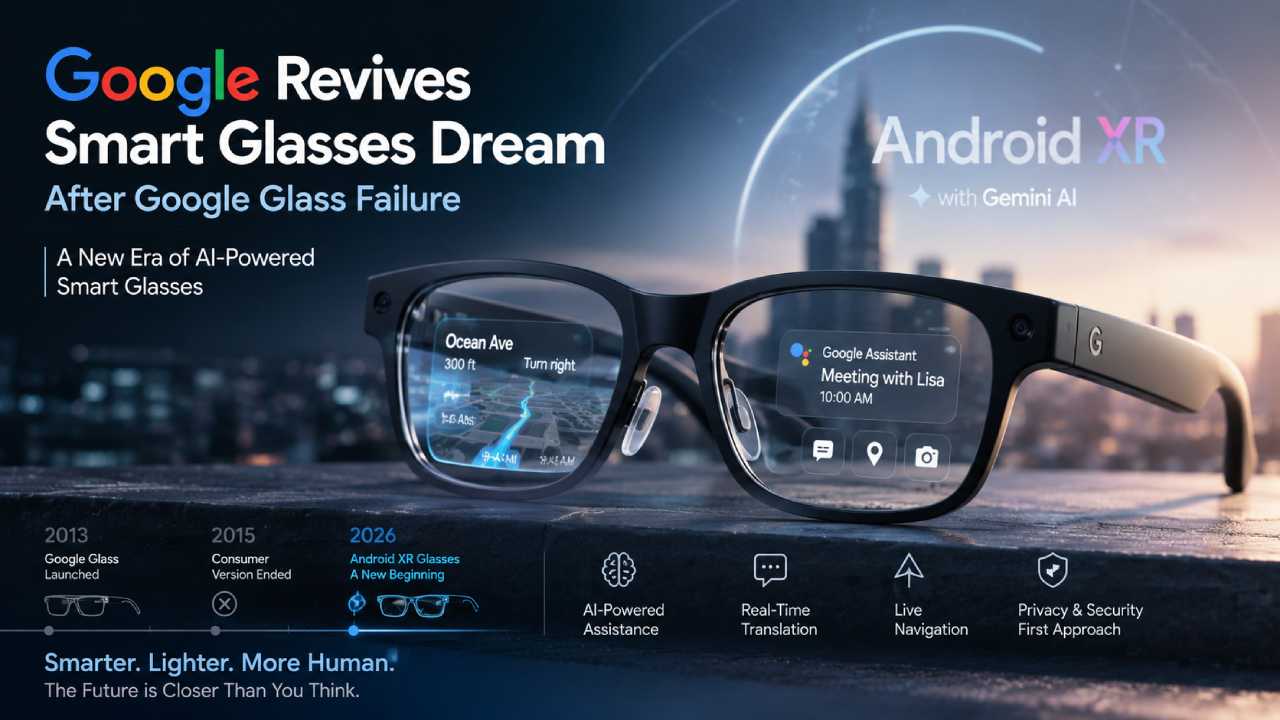
Mayumiotero – Google has once again become the center of attention in the technology world after the Android XR Glasses project started gaining massive discussion in May 2026. After the failure of Google Glass several years ago, many people believed Google would never return to the smart glasses market. However, the tech giant is now trying to revive its old dream with a much more mature, modern, and AI-powered approach. Interestingly, the rapid development of generative AI has convinced many analysts that the wearable technology era is finally ready to become part of everyday human life.
Read Also: WhatsApp Introduces Incognito Chat for AI Conversations and Promises Stronger Privacy
Google Revives Smart Glasses Dream with a New Vision
Google appears to have learned many lessons from the past. While Google Glass arrived too early for its time, Android XR Glasses are emerging at a moment when AI technology is evolving rapidly. In addition, people’s demand for practical and seamless devices continues to grow. Therefore, Google is trying to create smart glasses that are not only futuristic but also genuinely useful for daily activities. The presence of Gemini AI plays a major role because the technology can understand visual context in real time. As a result, smart glasses are no longer viewed as experimental gadgets but as future-ready devices with real-world potential.
The Failure of Google Glass Became an Expensive Lesson
Back in 2013, Google Glass successfully captured global attention. However, the product struggled to survive because multiple issues appeared at the same time. The device was too expensive, the design looked unusual, and privacy concerns quickly became controversial. In fact, many people felt uncomfortable around Google Glass users. Moreover, AI technology at the time was not advanced enough to deliver a natural user experience. Because of these challenges, Google eventually discontinued the consumer version of Google Glass a few years after launch. Nevertheless, the failure became a valuable lesson for Google in developing the next generation of wearable technology.
Android XR Glasses Bring More Natural AI Experiences
Unlike its predecessor, Android XR Glasses offer a far more natural experience. Users can now speak directly with AI while viewing information in real time through smart lenses. In addition, the device is expected to provide automatic language translation, live navigation assistance, and visual support for finding objects. Since Gemini AI already supports multimodal understanding, the interaction feels much more human compared to earlier smart glasses technology. Interestingly, many tech analysts believe this visual AI experience now resembles the futuristic concepts once seen only in science fiction movies.
Google Focuses on Fashionable and Comfortable Designs
One of the biggest mistakes with the original Google Glass was its awkward and overly technical appearance. Therefore, Google is now collaborating with modern eyewear brands to create more fashionable designs. This strategy is important because wearable devices must feel comfortable enough for all-day use. Furthermore, smart glasses need to blend naturally with modern lifestyles. Many analysts believe design will become one of the key factors determining whether Android XR can succeed in the global market. With lighter materials and a more elegant look, the chances of success appear much stronger than in the previous era.
Gemini AI Becomes Google’s Biggest Advantage
The presence of Gemini AI is the biggest difference between the old Google Glass and the new Android XR platform. Previously, Google Glass could only display simple information on a tiny screen. Now, AI can understand voices, images, objects, and even the surrounding environment in real time. In addition, the AI can provide contextual recommendations quickly and accurately. This advancement makes smart glasses feel significantly smarter and more practical for everyday use. Unsurprisingly, many technology media outlets have started calling Android XR the beginning of a new visual AI era. Some experts even believe wearable AI will become one of the biggest technology trends in the coming years.
Smart Glasses Begin Competing with Smartphones
Interestingly, several analysts predict that smart glasses could gradually reduce human dependence on smartphones. Although they may not fully replace phones yet, Android XR allows users to access information without constantly looking at a smartphone screen. Furthermore, voice-based interaction makes the experience more practical and efficient. Many people are beginning to imagine a future where navigation, messaging, and online searches can all be handled directly through smart lenses. Because of this possibility, smart glasses have once again become a major topic in the technology industry during May 2026.
Read Also: Korean-Style All-White Fence Inspiration That Makes Your Home Look Luxurious
Privacy Concerns Remain a Serious Discussion
Although the technology looks promising, privacy concerns continue to be one of the biggest public discussions. Many people worry that smart glasses could record surrounding activities without permission. In addition, the use of cameras and visual AI has sparked new debates about user data security. Google seems aware of these concerns because the company has started emphasizing transparency and privacy controls within Android XR. This step is important to prevent the public from repeating the same fears associated with Google Glass in the past. Even so, some observers believe the biggest challenge for smart glasses is not only technology but also how society will socially accept these devices.
The Technology Industry Believes the Timing Is Finally Right
Unlike the situation in 2013, the world today is far more prepared to accept AI-powered wearable technology. People are already familiar with AI assistants, smartwatches, and augmented reality in everyday life. In addition, advancements in processors and battery efficiency have made wearable devices more practical than before. Many major technology companies are now competing in the smart glasses market because they believe the category has enormous future potential. Therefore, Google does not want to fall behind in the rapidly growing visual technology race of 2026.
Google Revives Smart Glasses Dream and Sparks New Curiosity
The return of Google’s smart glasses project has successfully sparked global curiosity. Many people are now wondering whether Android XR will succeed or repeat the failure of Google Glass. However, one thing is clear: AI development has completely changed the situation compared to a decade ago. Furthermore, public interest in futuristic technology has increased dramatically over the last few years. For that reason, Android XR is no longer seen as just another product launch, but as a symbol of a major shift in how humans may interact with technology in the future.