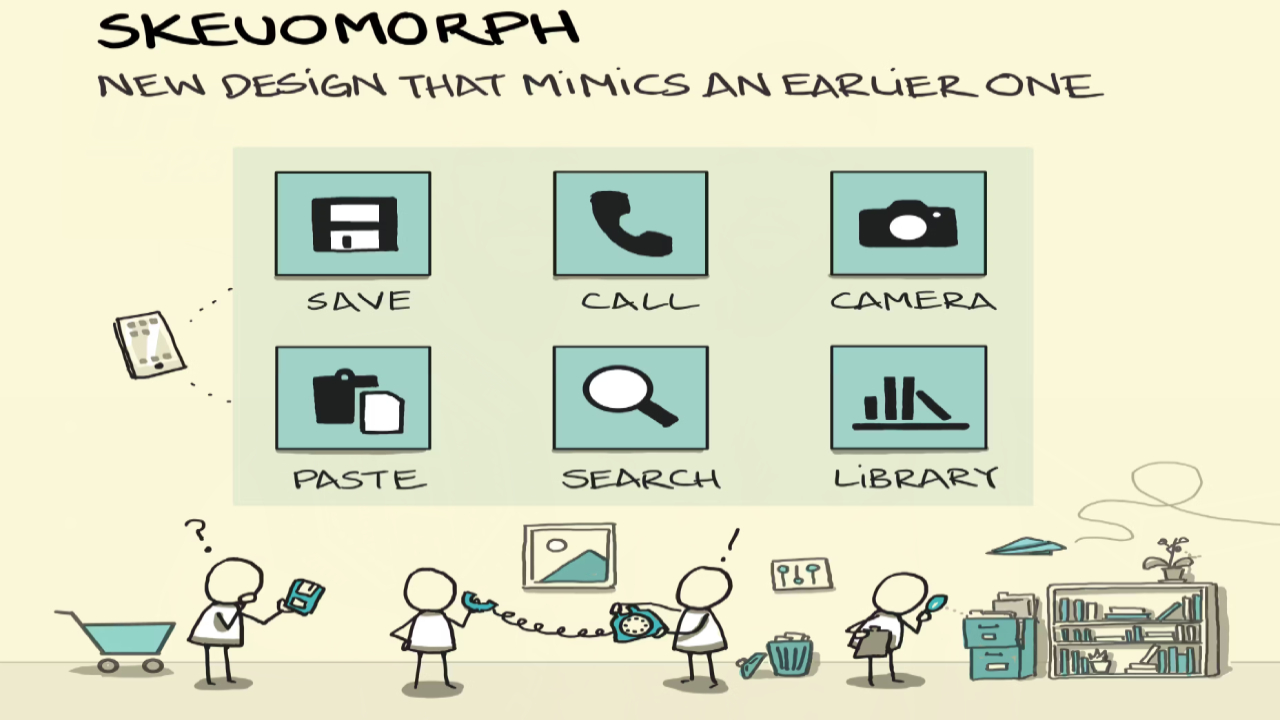
Mayumiotero – Skeuomorphism Revival has quietly re-entered design discussions as digital products search for stronger emotional connections. For years, flat and minimal interfaces dominated because they felt efficient and modern. However, as screens became cleaner, they also became colder. Consequently, designers began questioning whether clarity alone was enough. Skeuomorphism Revival reframes this concern by reintroducing familiar visual cues that remind users of real-world objects. From textured buttons to subtle shadows, these elements reduce cognitive friction, especially for non-technical users. In my view, this revival is less about nostalgia and more about restoring humanity in digital interactions.
“Read also: Inside Tesco’s AI Strategy: How Artificial Intelligence Is Powering Everyday Retail Work“
Why Flat Design Started to Feel Limiting
Initially, flat design solved real problems by improving load speed, scalability, and consistency. Nevertheless, over time, its extreme simplicity created ambiguity. Buttons looked like text, icons felt passive, and affordances became unclear. As a result, usability studies began showing hesitation among users who could not instantly tell what was clickable. Skeuomorphism Revival emerged partly as a corrective response. By adding depth, lighting, and material cues, interfaces regain intuitive guidance. Therefore, this shift is not a rejection of modernism but an evolution shaped by user behavior.
The Psychological Power Behind Familiar Visual Metaphors
Human brains are wired to understand physical objects faster than abstract shapes. Because of that, Skeuomorphism Revival taps into subconscious recognition. A slider that looks tangible or a knob that appears rotatable instantly communicates function. Moreover, these cues reduce onboarding time and learning curves. From a UX psychology standpoint, skeuomorphic details act as silent instructions. In practice, this means fewer errors and higher confidence, particularly in finance, health, or productivity apps where clarity is critical.
Modern Skeuomorphism Is Subtle, Not Excessive
Importantly, Skeuomorphism Revival today is not about glossy leather textures or exaggerated shadows like early smartphone apps. Instead, it focuses on restraint. Soft depth, micro-shadows, and gentle gradients create hierarchy without visual noise. This balanced approach often called “neo-skeuomorphism” or “soft UI” blends realism with minimalism. As a result, interfaces feel approachable while remaining elegant. In my experience, this hybrid style resonates strongly with users who want warmth without distraction.
When Skeuomorphism Makes the Most Sense
Context matters. Skeuomorphism Revival works best when usability and emotional reassurance are priorities. For example, fintech dashboards, audio tools, or educational platforms benefit from tactile metaphors. Conversely, data-heavy or developer-focused tools may still perform better with flatter systems. Therefore, designers should evaluate audience maturity, task complexity, and risk level before adopting skeuomorphic cues. Used strategically, it enhances trust rather than merely decorating the interface.
“Read also: Zara’s Quiet AI Experiment Is Changing How Retail Imagery Gets Made“
Brand Identity and Emotional Differentiation
Another reason behind Skeuomorphism Revival is brand fatigue. Many apps now look identical due to shared design systems. By reintroducing material-inspired elements, brands regain distinctiveness. Texture, depth, and motion can communicate personality more effectively than color alone. Consequently, skeuomorphic touches help products stand out in crowded markets. From a branding perspective, this revival offers a competitive edge rooted in emotion rather than trend-chasing.
Technology Finally Catches Up with the Vision
Interestingly, earlier skeuomorphic designs were heavy and performance-costly. Today, advanced GPUs, scalable vector graphics, and adaptive frameworks make realistic effects lightweight. Because of these advancements, Skeuomorphism Revival no longer sacrifices speed or responsiveness. Additionally, dark mode and high-resolution displays amplify depth and realism naturally. This technical maturity makes the revival practical, not just aesthetic.
Skeuomorphism Revival as a Human-Centered Future
Ultimately, Skeuomorphism Revival reflects a broader shift toward human-centered design. Users are no longer impressed by minimalism alone; they seek comfort, clarity, and emotional resonance. By thoughtfully blending realism with modern UX principles, designers can create interfaces that feel intuitive and alive. In my opinion, this revival is not a temporary trend but a signal that digital products are maturing learning to speak the visual language humans instinctively understand.