Mayumiotero – Machine Vision Helps robots transform cameras into practical tools for understanding their surroundings. Instead of simply recording images, a vision system can detect objects, inspect surfaces, estimate positions, and guide robotic movement. This ability has become increasingly useful as automation moves beyond repetitive tasks. For example, a robotic arm may need to locate randomly positioned components before picking them up. Meanwhile, a warehouse robot must recognize obstacles while moving through a busy environment. Cameras, sensors, software, and artificial intelligence can work together to support these actions. However, robot vision is not identical to human sight. Machines interpret pixels, depth information, patterns, and programmed rules rather than experiencing a scene as people do. Even so, modern vision technology gives robots valuable information about the physical world. As a result, machines can perform many visual tasks with greater consistency and flexibility.
Read Also: ChatGPT Free Gets Smarter as OpenAI Expands Access to GPT-5.6 Luna
Machine Vision Gives Robots Practical Digital Eyes
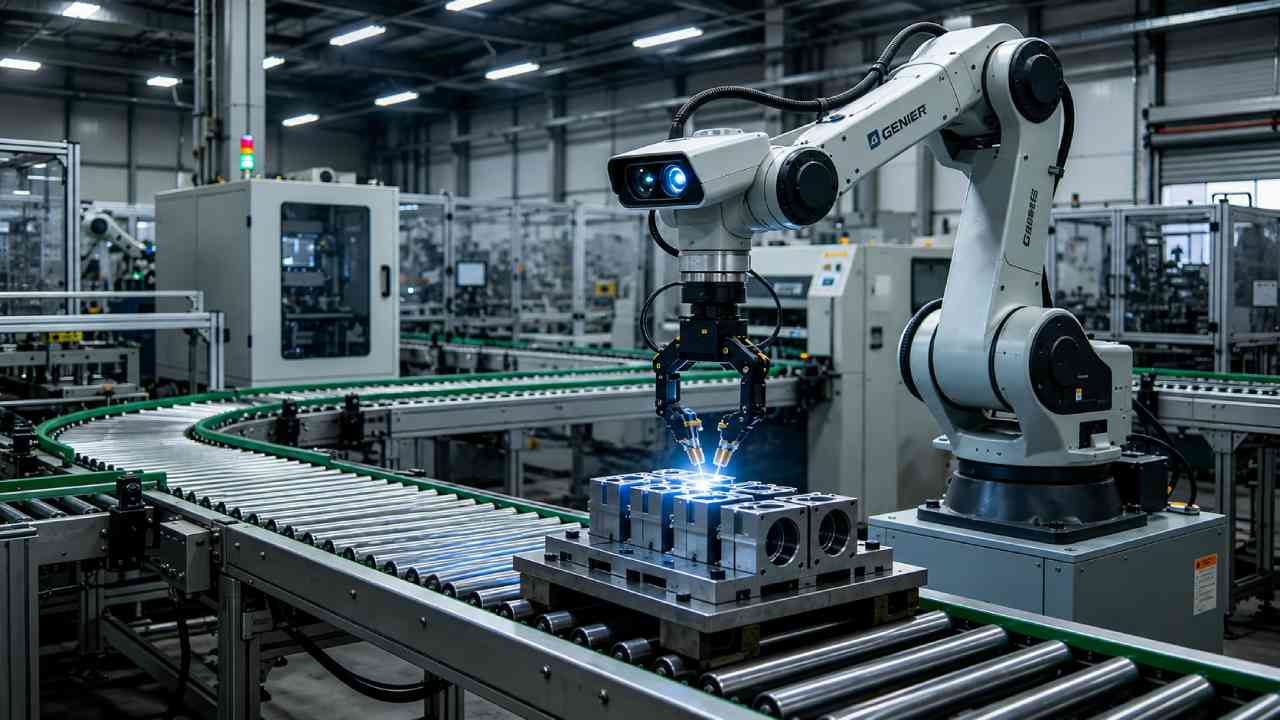
A camera alone does not make a robot intelligent. It simply captures visual information from the surrounding environment. Therefore, software must process that information before a robot can use it. Machine Vision Helps convert captured images into useful data about objects, positions, shapes, patterns, and surfaces. A basic system may search for predefined edges or colors. More advanced systems can combine computer vision with machine learning models to recognize less predictable objects. Once the system identifies something important, it sends relevant information to the robot controller. The robot can then adjust its movement or perform a specific action. For instance, an industrial arm may calculate where a component sits before attempting to pick it up. Consequently, visual information becomes part of the robot’s decision process. This relationship between cameras, processing software, and robotic control is what makes machine vision so useful in modern automation.
How Cameras Turn Images Into Useful Information
Machine vision starts with image acquisition. A camera captures light reflected from objects and converts it into digital image data. However, image quality depends on more than camera resolution. Lighting, lens selection, viewing angle, exposure, and distance can significantly affect the result. After image capture, software begins processing the visual data. It may locate edges, measure dimensions, identify patterns, or compare an object with known references. Machine Vision Helps simplify this information into something a robot can act upon. For example, a system does not need to understand every detail inside a warehouse. Instead, it may only need to identify a package and determine its location. This targeted approach can make robotic vision efficient for specific tasks. Furthermore, carefully controlled lighting often improves reliability. In industrial environments, engineers may spend considerable time designing illumination because even an advanced algorithm can struggle when the original image lacks useful detail.
Artificial Intelligence Expands Robot Recognition
Traditional machine vision often works extremely well when objects and conditions remain predictable. However, real environments are not always consistent. Packages rotate, components overlap, lighting changes, and objects may appear different from one another. This is where AI-based computer vision can provide additional flexibility. Machine Vision Helps robots classify or detect objects using models trained on visual examples. Instead of relying only on fixed rules, machine learning systems can learn patterns from data. Nevertheless, AI does not remove the need for careful engineering. Training data must represent realistic operating conditions, while camera placement and lighting still matter. Furthermore, engineers should evaluate errors before deploying a system in important applications. In practice, traditional vision and AI can complement each other. A conventional algorithm might measure an object’s dimensions, while an AI model identifies its category. Together, these approaches can create a more adaptable visual system.
3D Vision Adds Depth to Robotic Perception
A standard two-dimensional image provides useful information about width and height. Yet many robotic tasks also require depth. A robot picking objects from a container, for example, must understand which items are closer and how they are positioned in three-dimensional space. Therefore, 3D vision has become important in many automation systems. Technologies may include stereo cameras, structured light, time-of-flight sensors, or other depth-sensing methods. Machine Vision Helps combine this spatial information with object recognition to estimate where an item exists in relation to the robot. As a result, robotic arms can approach objects from more suitable angles. Depth information can also support navigation and environmental mapping. However, every sensing method has trade-offs involving range, accuracy, speed, surface properties, and operating conditions. Engineers must therefore choose technology based on the actual task rather than assuming one 3D system will work equally well everywhere.
Factories Remain a Major Home for Machine Vision
Manufacturing provides some of the clearest examples of machine vision in everyday operation. Production lines often require repetitive visual checks that must happen quickly and consistently. Cameras can inspect component placement, verify labels, read codes, measure dimensions, or identify visible defects. Meanwhile, robotic systems can use vision to locate parts before assembly. Machine Vision Helps connect these inspection and handling processes with automated production equipment. For example, a camera may determine whether a component is positioned correctly. If it is not, the system can flag the item or instruct another machine to respond. This process can reduce dependence on fixed mechanical positioning for certain tasks. However, machine vision should not be treated as a universal replacement for human inspection. Some defects remain difficult to define visually, while unusual cases may require human judgment. In my view, the strongest systems use automation where repeatability matters while keeping people involved where interpretation and experience remain valuable.
Warehouse Robots Need More Than Simple Navigation
Modern warehouses present a different challenge from controlled manufacturing lines. Boxes vary in size, workers move through shared spaces, and inventory constantly changes position. Consequently, robotic systems may need several types of sensing at once. Cameras can help recognize packages, shelves, markers, or other relevant features. Meanwhile, depth sensors and LiDAR may provide additional spatial information. Machine Vision Helps robots extract useful visual details from this changing environment. A picking robot, for instance, may need to identify a particular package among several nearby objects. It must then estimate the package’s position before attempting to grasp it. Mobile robots can also use visual information as part of localization and navigation systems. Nevertheless, safety requires more than object recognition alone. Commercial robotic platforms may combine multiple sensors, control systems, safety mechanisms, and operating procedures to manage real-world conditions.
Agriculture Shows How Robot Vision Moves Outdoors
Agricultural environments demonstrate why robot vision can be both powerful and difficult. Unlike a factory, a field cannot provide perfectly controlled lighting or identical objects. Leaves overlap, shadows move, plants grow irregularly, and weather changes continuously. Still, visual technology can support several agricultural applications. Cameras may help machines distinguish crops, monitor plant conditions, or locate produce. Machine Vision Helps translate those visual patterns into information that automated equipment can use. For instance, a robotic system designed for harvesting may need to locate fruit before calculating an approach. Meanwhile, another platform may analyze rows of plants while moving through a field. Yet outdoor conditions create significant engineering challenges. Dust, rain, direct sunlight, and changing backgrounds can reduce image quality. Therefore, successful agricultural vision systems usually require careful sensor selection, robust algorithms, and extensive real-world testing rather than laboratory performance alone.
Machine Vision Can Support Quality Inspection
Quality inspection is another important application because many manufacturing problems have visible characteristics. Cameras can examine surfaces, packaging, printed information, component alignment, and other measurable features. Moreover, machines can repeat the same inspection criteria across large numbers of products. Machine Vision Helps manufacturers automate checks that would otherwise require continuous visual attention. However, reliability depends on how clearly a defect can be defined and captured. A tiny scratch may become difficult to detect if reflections hide it. Similarly, changes in material texture may produce false detections when lighting is inconsistent. For this reason, successful inspection begins with understanding the defect rather than simply purchasing a higher-resolution camera. Engineers must consider lenses, illumination, image processing, acceptance thresholds, and production speed together. When these elements align, machine vision can provide consistent data that supports both immediate inspection and longer-term process improvement.
Read Also: Jewelry Design Trends Bringing Art, Elegance, and Modern Craftsmanship Together
Robot Vision Still Has Important Limitations
The phrase “robots can see” sounds impressive, but it can also create unrealistic expectations. Robots do not necessarily understand visual scenes in the broad way humans do. Instead, their capabilities depend on sensors, algorithms, training data, and the tasks they were designed to perform. Machine Vision Helps robots interpret selected aspects of an environment, but performance can decline when conditions change unexpectedly. Reflections, transparent objects, shadows, motion blur, dust, and unusual viewing angles can all create problems. AI models may also produce incorrect classifications when they encounter unfamiliar examples. Therefore, testing should include difficult situations rather than only ideal conditions. Another challenge involves computing requirements. More complex visual models may require additional processing power and can introduce latency. Engineers must balance accuracy, speed, hardware cost, and reliability. Understanding these limitations is essential because realistic expectations lead to better robotic system design.
Why Human Expertise Still Matters in Visual Automation
Automation may reduce certain manual tasks, yet people remain essential throughout the machine vision process. Engineers determine camera positions, select lenses, design lighting, prepare datasets, configure algorithms, and define acceptable performance. Technicians also maintain equipment and investigate unexpected failures. Machine Vision Helps machines perform visual tasks, but humans still establish what those tasks mean. This distinction matters because an algorithm can optimize the wrong target if its requirements are poorly defined. For example, a system designed to identify defective products needs clear examples of acceptable and unacceptable conditions. Moreover, operators often understand production problems that may not appear in technical specifications. Their experience can reveal edge cases that developers overlook. Therefore, effective automation benefits from collaboration between software specialists, robotics engineers, technicians, and people who understand the working environment. Better technology does not eliminate human expertise. Instead, it can make that expertise more scalable.
The Future of Robots Will Be Increasingly Visual
Robotic systems are gradually moving into environments that demand greater flexibility. As that happens, visual perception becomes increasingly valuable. Better cameras, depth sensors, edge computing, and AI models can allow robots to process more information near the point of operation. Machine Vision Helps create a bridge between digital intelligence and physical action. A robot can first observe an object, estimate its location, and then respond through movement. However, the future will likely involve sensor combinations rather than cameras working alone. Vision may operate alongside force sensing, LiDAR, radar, tactile sensors, and other technologies. Together, these inputs can provide a richer picture of the surrounding environment. The most interesting development is not simply that robots are gaining better cameras. Instead, machines are becoming better at converting visual information into useful actions. That shift could influence manufacturing, logistics, agriculture, and many other forms of automation.